History and Origin of Naengmyeon
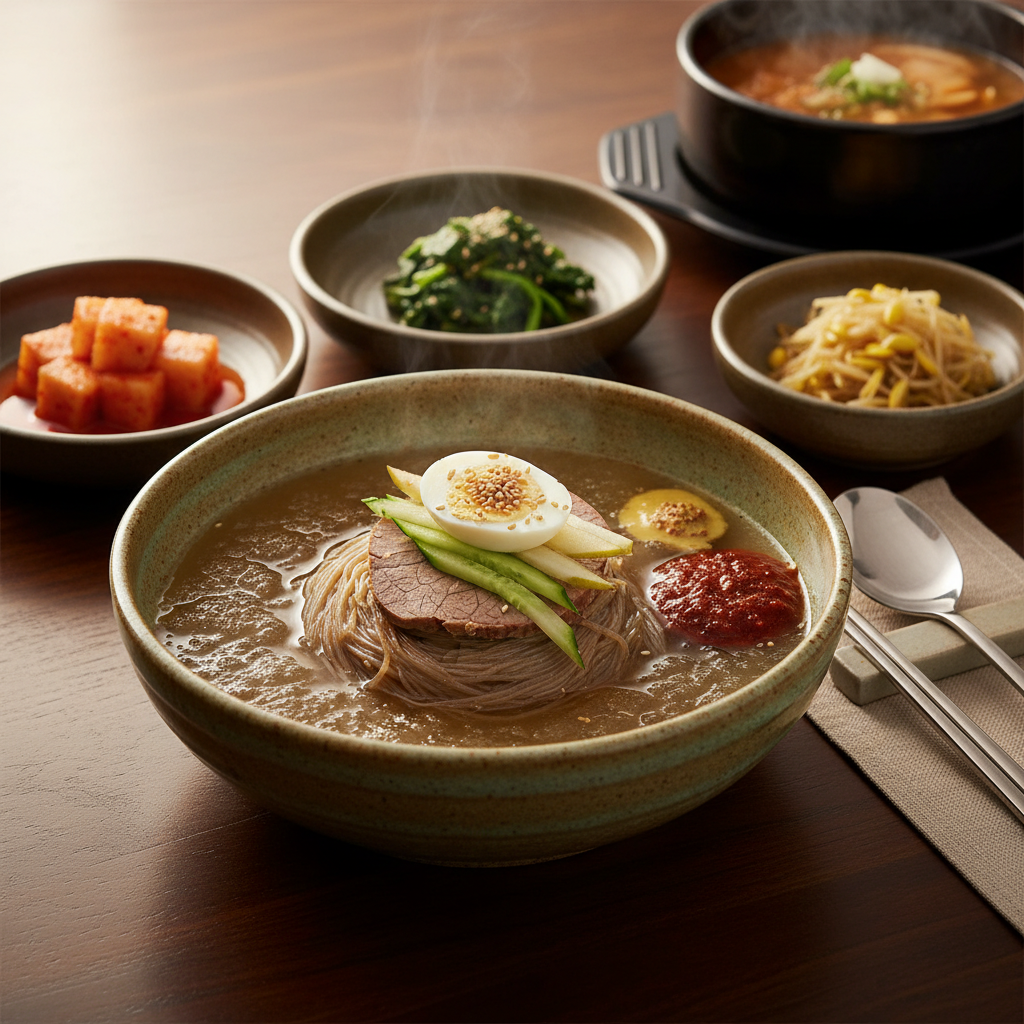
Naengmyeon is a traditional dish from the Joseon Dynasty, primarily enjoyed in summer. It originated in Pyongyang and Hamhung and was initially a winter dish when buckwheat was in season. Post-Korean War, it spread throughout Seoul and became a staple summer food in South Korea. Naengmyeon is not just a refreshing meal but also reflects Koreans' appreciation for seasonal change and harmony with nature in their culinary culture.
Traditional Recipe
Ingredients List
- Buckwheat noodles: 200g
- Beef broth: 1L
- Cucumber: 1/2 piece
- Pear: 1/4 piece
- Boiled egg: 1
- Kimchi: 50g
- Vinegar: 2 tablespoons
- Sugar: 1 tablespoon
- Salt: a pinch
- Mustard: 1 teaspoon
Cooking Method
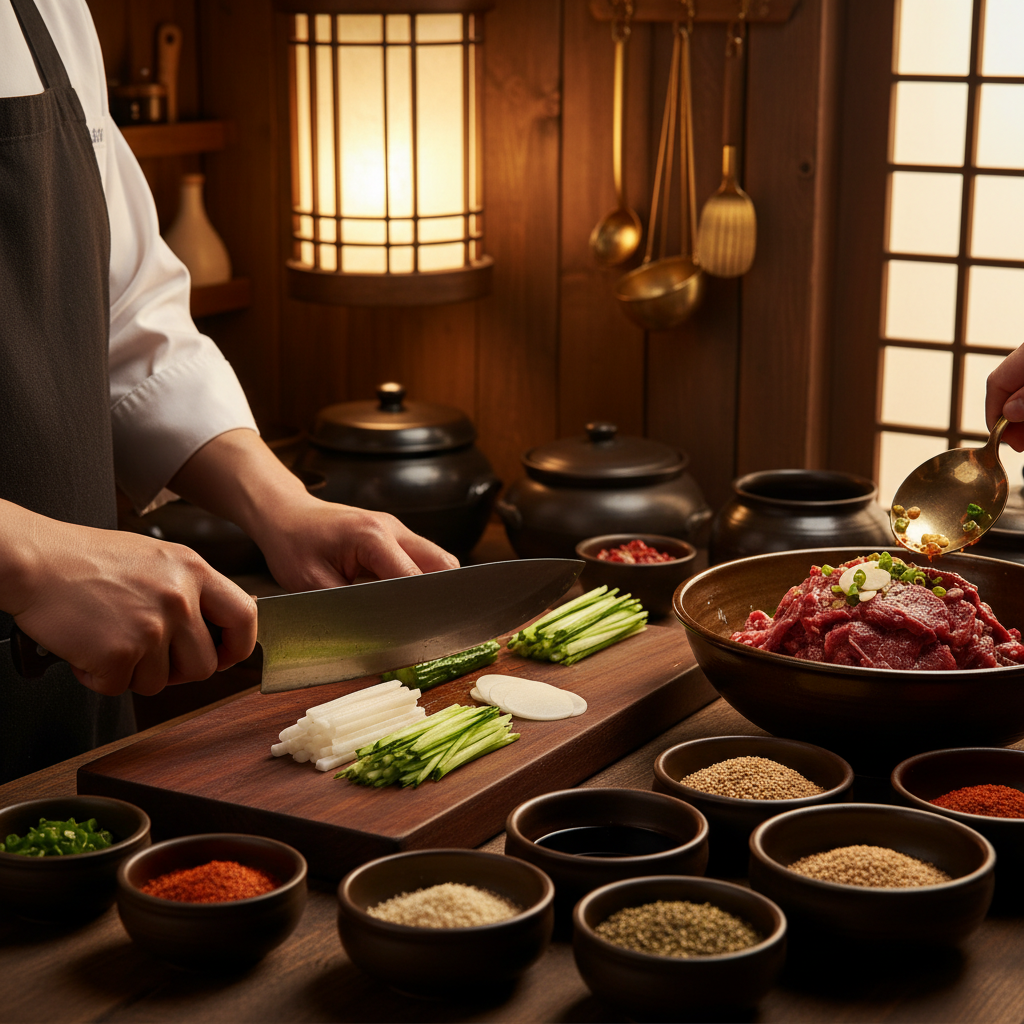
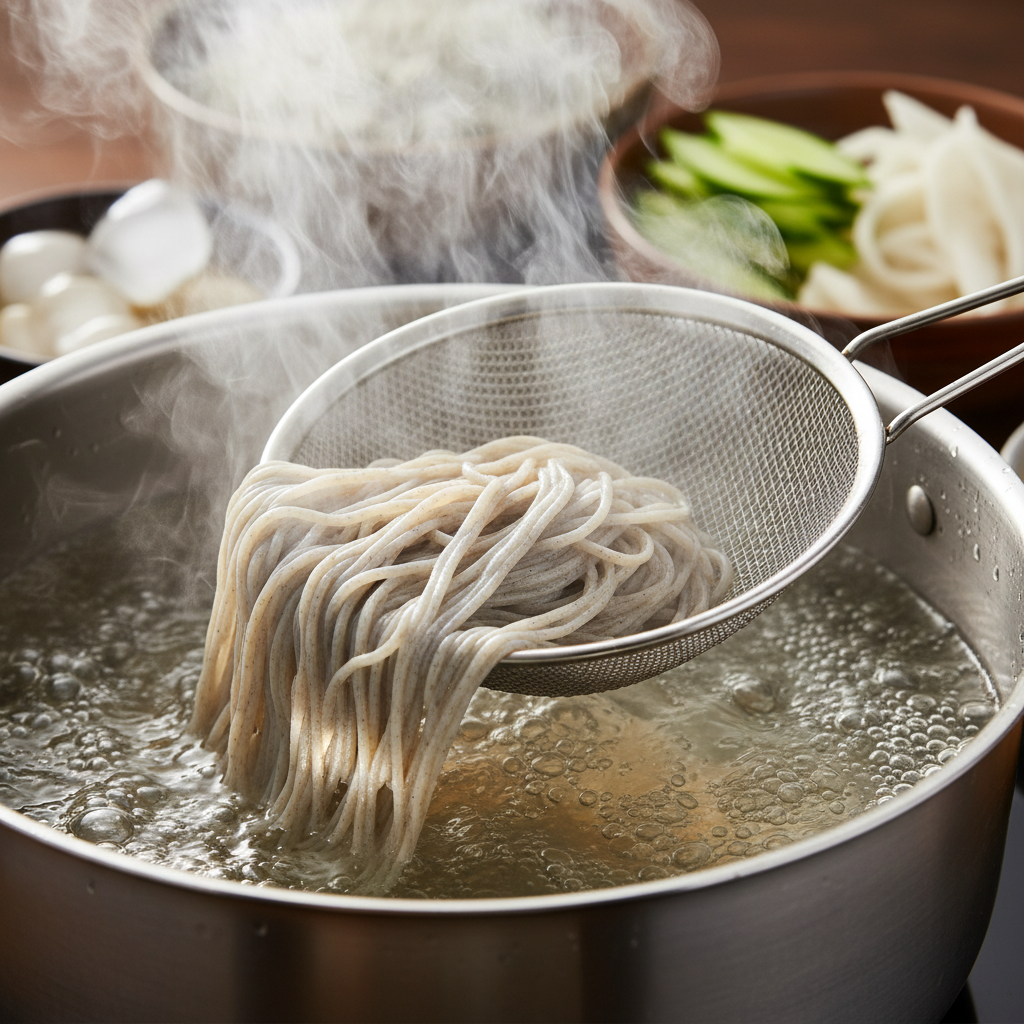
- Boil the buckwheat noodles in boiling water, rinse several times in cold water to remove starch, and drain.
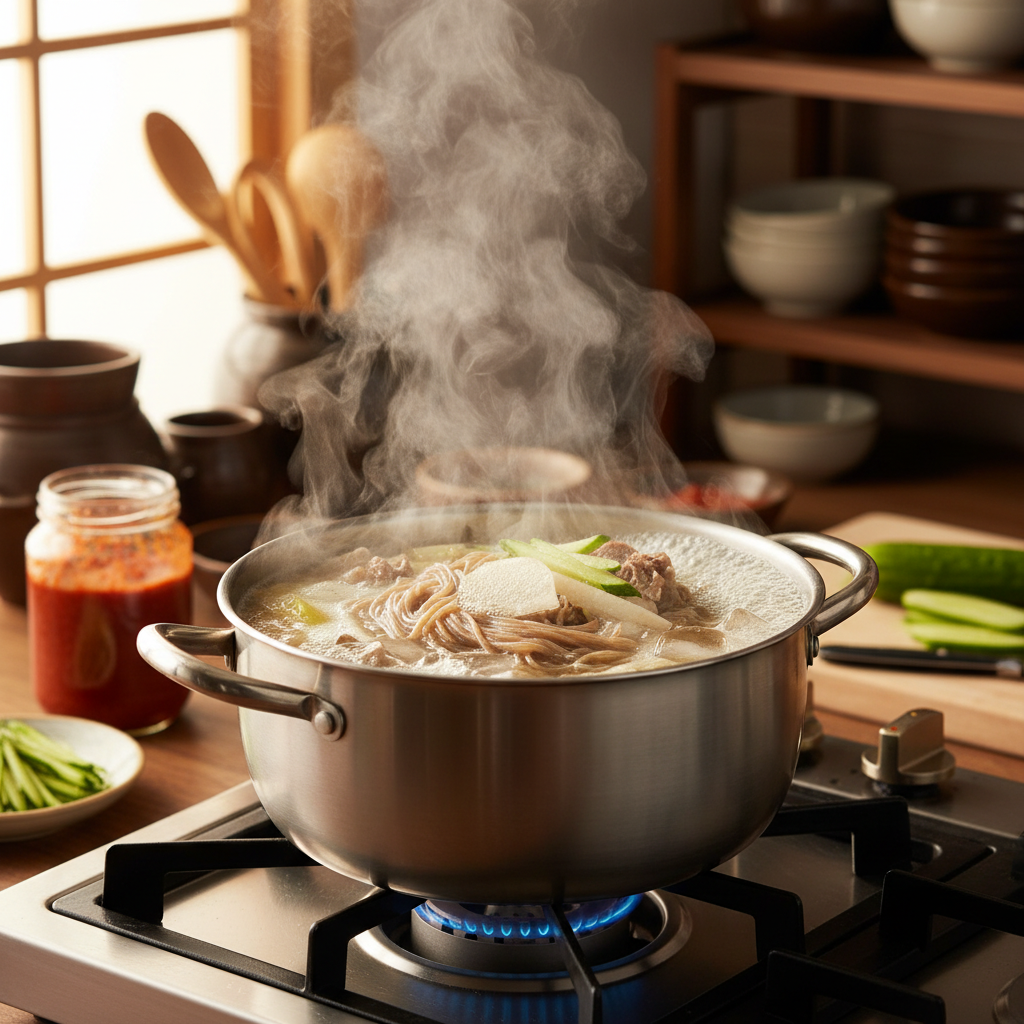
- In beef broth, add vinegar, sugar, and salt, mix well, and slightly freeze to chill the broth.
- Thinly slice cucumber and pear, and chop the kimchi.
- Place buckwheat noodles in a bowl and pour the chilled broth over them.
- Top with cucumber, pear, kimchi, boiled egg, and a touch of mustard.
Flavor Characteristics
Naengmyeon is known for its harmony of the cold broth and chewy buckwheat noodles. The broth combines the rich taste of beef with the tanginess of vinegar, enhancing its umami. Thinly sliced cucumber and pear add a crunchy texture, while the spiciness of kimchi balances the overall flavor. Mustard adds a spicy kick, perfectly blending with the flavors of each ingredient.
Cooking Tips and Secrets
For an extra layer of flavor, consider using bone broth for the soup base, as it provides a richer taste. Adding a bit of salt when freezing the broth enhances the flavor. Be careful not to overcook the noodles to maintain their chewy texture. Fresh ingredients for garnishes are essential to bring out the best flavors in naengmyeon.
Variation Recipes
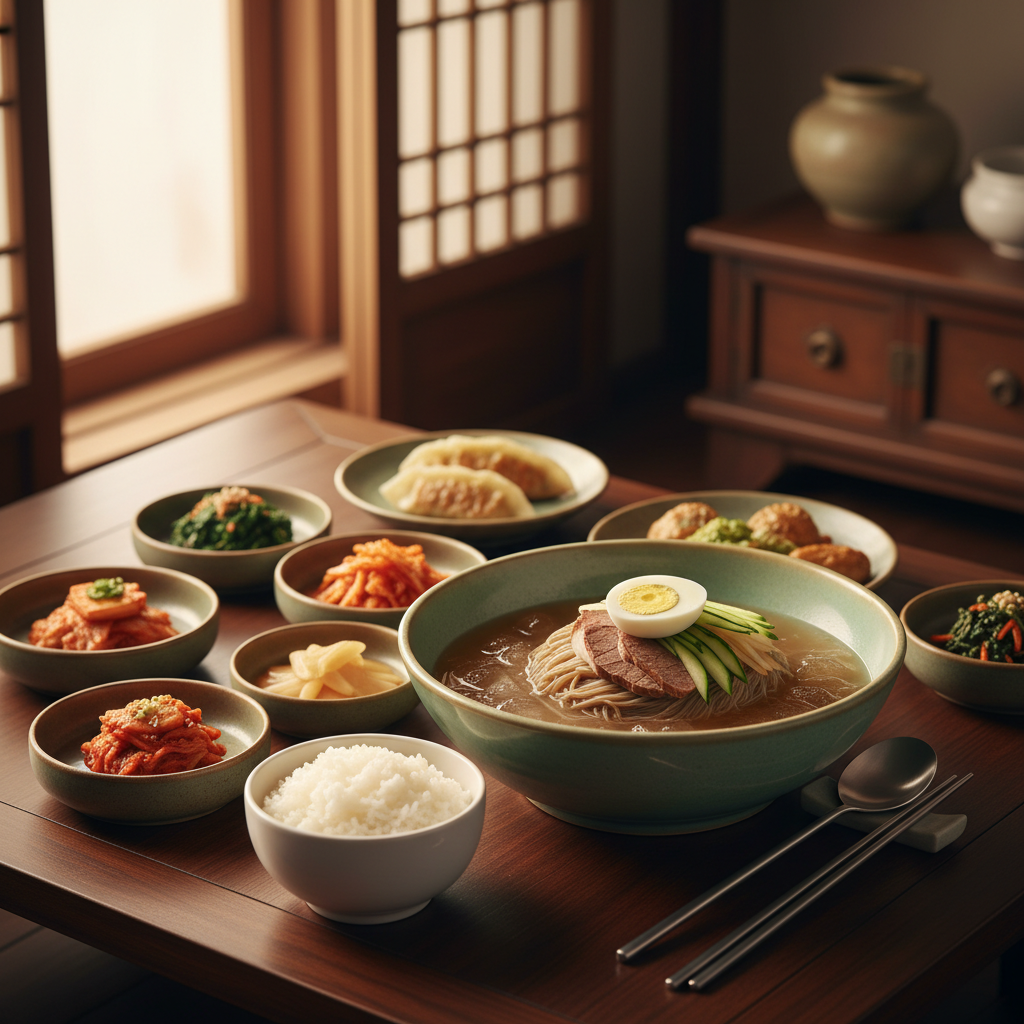
A modern variation is Bibim Naengmyeon, mixed with a spicy sauce made from gochujang, red pepper powder, sugar, vinegar, and sesame oil. For a fusion twist, try topping with tuna or salmon for a new taste experience. For a quick version, using frozen noodles allows for faster preparation.
Accompaniments and Table Setting
Naengmyeon pairs well with side dishes like kimchi, dried radish, and various Korean pancakes. Kimchi enhances the sweet and sour flavors of naengmyeon. Complementary drinks like makgeolli or cold water complete the meal. Naengmyeon is excellent on its own, but a variety of side dishes can create a more abundant dining experience.
This structure provides a comprehensive guide to Naengmyeon, complete with history, traditional and modern recipes, and serving suggestions, presented in both Korean and English.