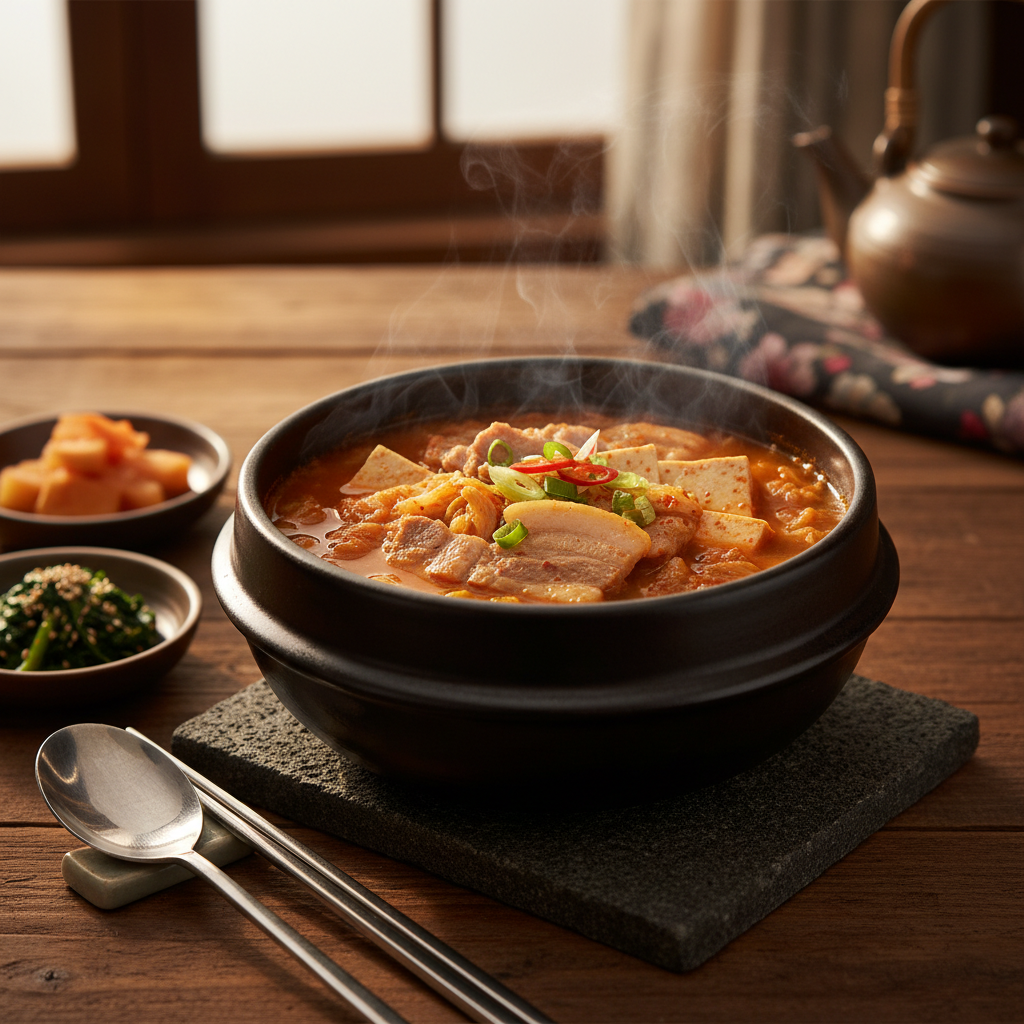
The History and Origin of Kimchi Jjigae
Kimchi Jjigae is one of Korea’s quintessential traditional dishes, a staple on the Korean dining table. Though its exact origins are uncertain, it likely emerged around the early 20th century as kimchi became popular. Kimchi Jjigae is a dish deeply embedded in Korean life and culture, often enjoyed at home. It can be made with various ingredients according to the seasons, making it a versatile dish enjoyed year-round.
Authentic Recipe
Ingredient List
- 500g of fermented kimchi
- 200g of pork shoulder
- 150g of tofu
- 1 onion
- 1 stalk of green onion
- 1 tablespoon of red pepper powder
- 1 tablespoon of minced garlic
- 1 liter of anchovy broth
- A pinch of salt and soy sauce
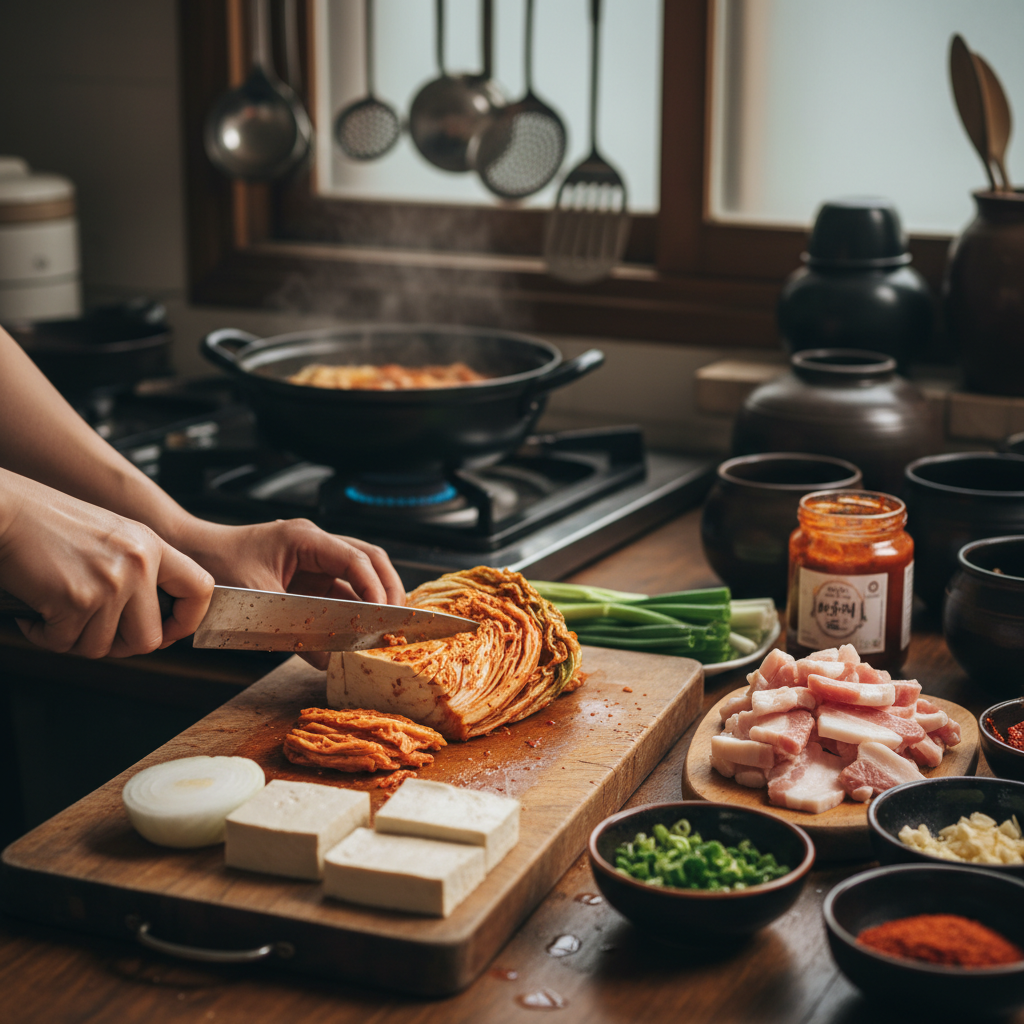
Cooking Steps
- Cut the pork into bite-sized pieces.
- Slice the kimchi and cube the tofu.
- Pour anchovy broth into a pot and bring it to a boil.
- Add pork, kimchi, and onion to the boiling broth and simmer for 15 minutes.
- Stir in red pepper powder and minced garlic, then season with soy sauce and salt.
- Add tofu and green onion, simmer for an additional 5 minutes, and finish.
Flavor Characteristics
Kimchi Jjigae is characterized by its spicy and umami-rich flavor. The tangy, refreshing taste of fermented kimchi complements the savory pork, while the onion and green onion add a sweet depth. The soft texture of the tofu balances the spicy broth, providing warmth and comfort. This harmony of flavors is what captivates Korean palates.
Cooking Tips and Secrets
To make Kimchi Jjigae even more delicious, choosing the right kimchi is crucial. Well-fermented kimchi adds a robust tang that enriches the stew. Additionally, sautéing the pork before adding it to the stew enhances the dish's savory notes. Using anchovy broth imparts a natural, deep umami flavor. The secrets are simple, but these subtle differences in preparation can greatly influence the taste.
Variations of the Recipe
In modern times, there are various simplified and creative versions of Kimchi Jjigae. For instance, using canned tuna instead of pork can create a convenient yet tasty Tuna Kimchi Jjigae. Adding cheese for extra richness or frozen dumplings for a different texture are other popular variations.
Pairings and Table Setting
To fully enjoy Kimchi Jjigae, complementary side dishes are essential. It is typically served with rice, and simple side dishes like seasoned vegetables, additional kimchi, or fresh radish salad pair well. A rolled omelet can also help neutralize the stew's spiciness. Enjoying it with Korean soju enhances the flavors of the stew.