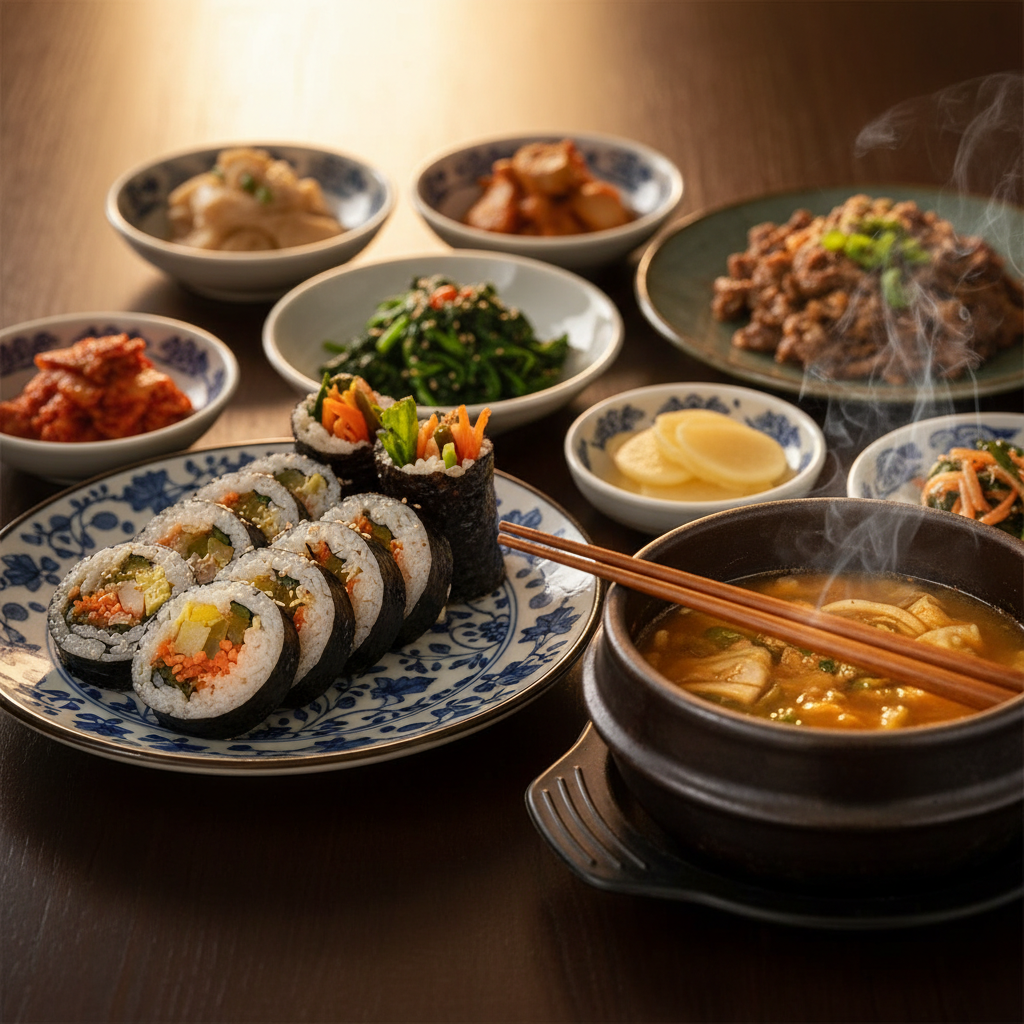
The History and Origin of Gimbap
Gimbap is one of Korea's representative dishes, tracing its origins primarily to the early 20th century. However, its roots can be linked to the Edo-period Japanese 'norimaki.' In Korea, it evolved into a dish made of seaweed and rice, filled with various ingredients, and became popular with the rise of the lunchbox culture. Gimbap is loved for its convenience during picnics and outdoor activities, with the diverse ingredients reflecting the richness of Korean food culture.
Authentic Recipe
Ingredients List
- Seaweed sheets (10 sheets)
- Rice (5 cups)
- Carrots (2, julienned)
- Spinach (150g)
- Pickled radish (200g)
- Fish cake (200g, cut lengthwise)
- Eggs (4)
- Salt, sesame oil, sesame seeds (to taste)
Cooking Instructions
- Mix warm rice with salt and sesame oil.
- Lightly sauté the carrots with salt.
- Blanch spinach, remove excess water, and season with salt and sesame oil.
- Prepare the pickled radish and fish cake by cutting them lengthwise.
- Beat eggs, cook into a thin omelet, and cut into strips.
- Spread rice thinly over the seaweed and layer the prepared ingredients evenly.
- Roll tightly using a bamboo mat.
- Slice into bite-sized pieces and serve on a plate.
Flavor Profile
The flavor of gimbap offers a harmonious blend of various textures in one bite. The toasted seaweed and seasoned rice create a comforting base, complemented by the crunchiness of carrots and the freshness of spinach. The eggs and fish cake add softness, while the pickled radish contributes a sweet and tangy taste. When these flavors come together, gimbap provides a rich symphony of taste that goes beyond a simple meal.
Cooking Tips and Secrets
The key to making delicious gimbap is the seasoning and temperature of the rice. Keep the rice slightly warm and seasoned with salt and sesame oil. Use roasted seaweed and ensure the fillings are free from moisture to prevent the gimbap from unraveling easily.
Variation Recipes
Modern takes on gimbap include versions with cream cheese and avocado, or bulgogi-filled gimbap, adding new flavors and textures to the traditional dish. These variations cater to diverse palates. Additionally, there are innovative options like veggie gimbap for vegetarians or cup gimbap for a quick fix.
Pairings and Table Setting Suggestions
Complementary sides for gimbap include miso soup, cucumber salad, and radish kimchi. It also pairs well with traditional Korean drinks like makgeolli or plum wine. While gimbap is a complete meal on its own, these accompaniments can enhance its presentation and flavor profile for a fulfilling dining experience.
You can expand on each section with more specific details or personal anecdotes to reach the desired character count. Let me know if you need more elaboration or assistance!