The History and Origin of Gimbap
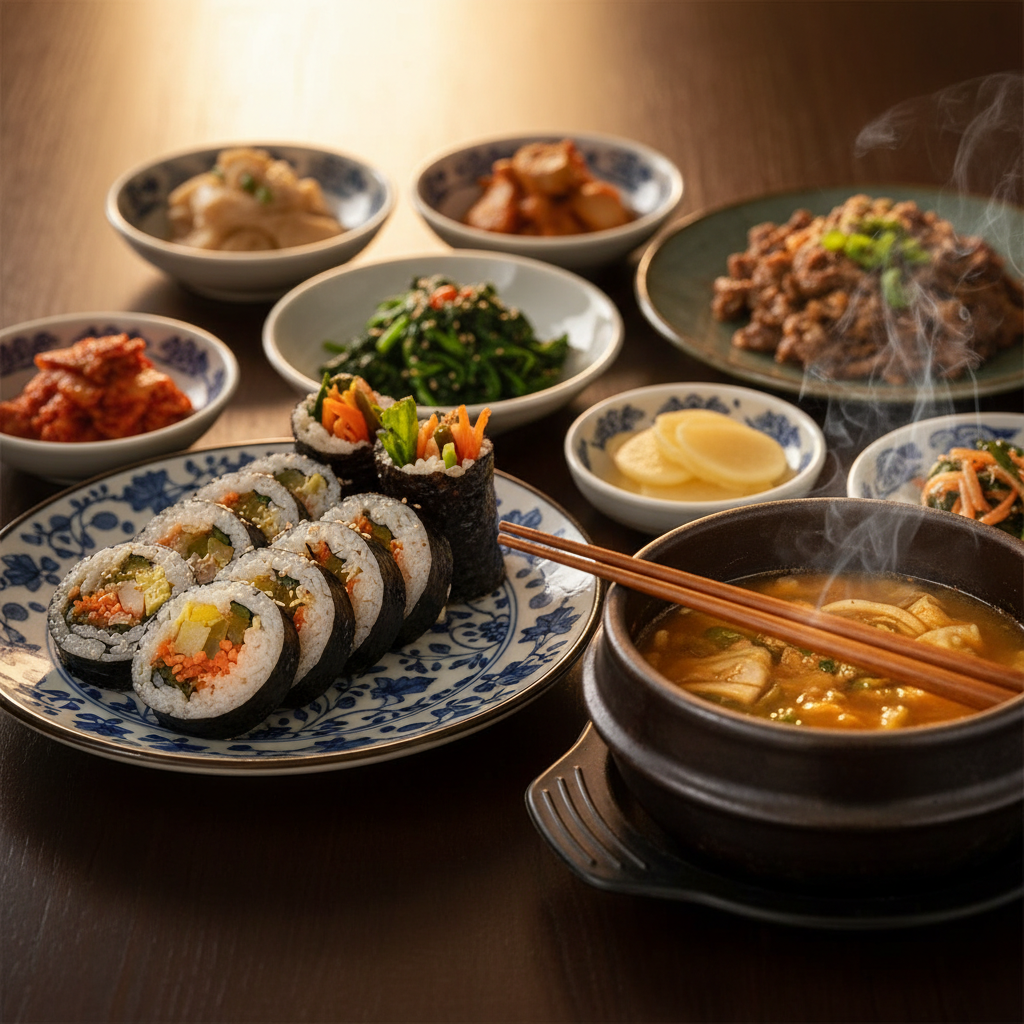
Gimbap is one of Korea's traditional dishes, tracing its origins back to the Joseon Dynasty. Originally known as "bojagi-bap," it became a convenient lunchbox food. Gimbap, wrapped in seaweed with rice and various ingredients, became indispensable for family outings and picnics. It symbolizes both practicality and sincerity in Korean life.
Authentic Recipe
To make traditional gimbap, you will need the following ingredients:
- Seaweed sheets (3 pieces)
- Rice (3 cups)
- Spinach (100g)
- Carrot (1)
- Pickled radish (50g)
- Ham (100g)
- Eggs (2)
- Sesame oil (2 tablespoons)
- Salt and pepper (1 teaspoon each)
Cooking instructions:
- Mix rice with sesame oil and salt evenly.
- Blanch spinach, rinse in cold water, and season with salt and sesame oil.
- Grate the carrot finely, season with salt, and stir-fry lightly.
- Slice ham and eggs into appropriate sizes and cook them.
- Spread rice thinly on a seaweed sheet and layer the prepared ingredients.
- Roll the seaweed, brushing the edge with sesame oil to seal it.
- Cut into bite-sized pieces and serve on a plate.
Flavor Characteristics
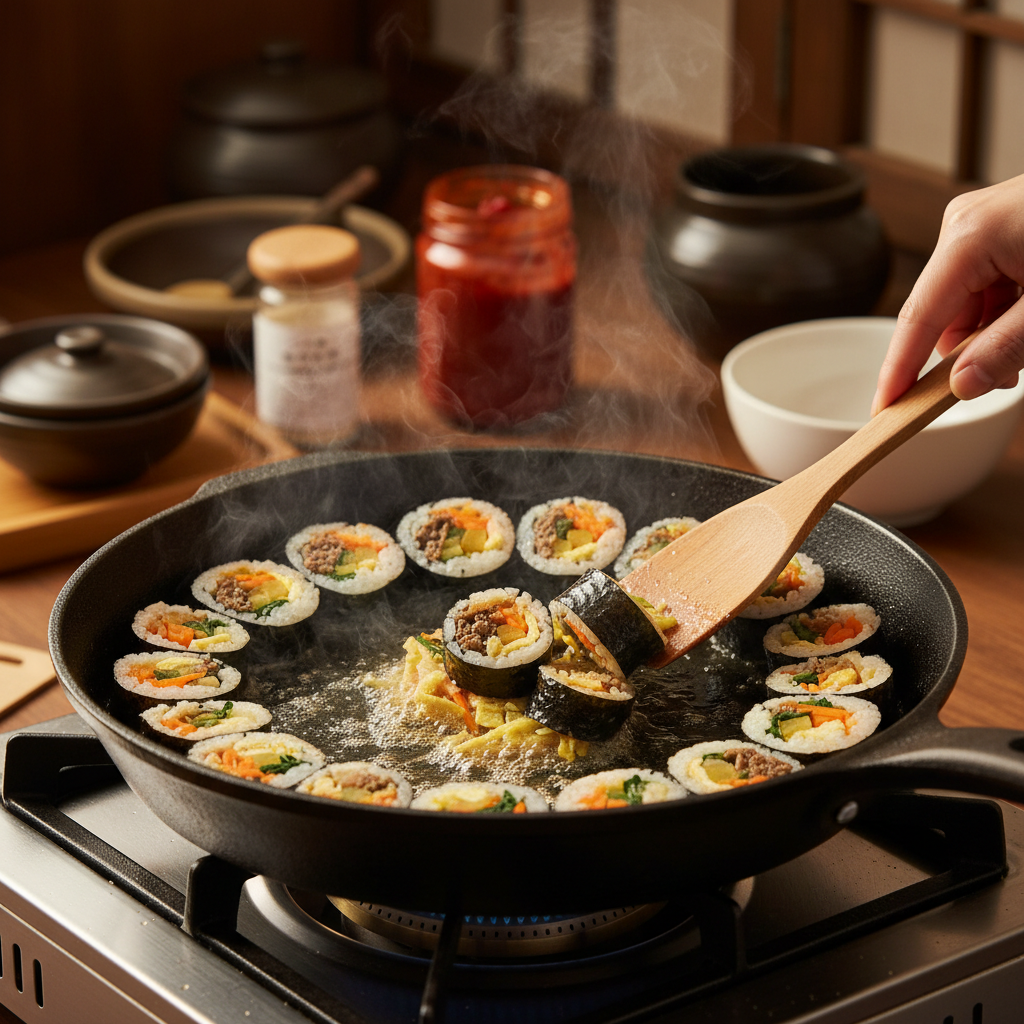
Gimbap offers a harmonious blend of flavors on its own. The combination of soft rice and savory sesame oil, the freshness of crunchy carrot and spinach, and the melding of various ingredients create a delightful flavor that pleases everyone. Its mild yet umami-rich taste makes it an irresistible choice.
Cooking Tips and Secrets
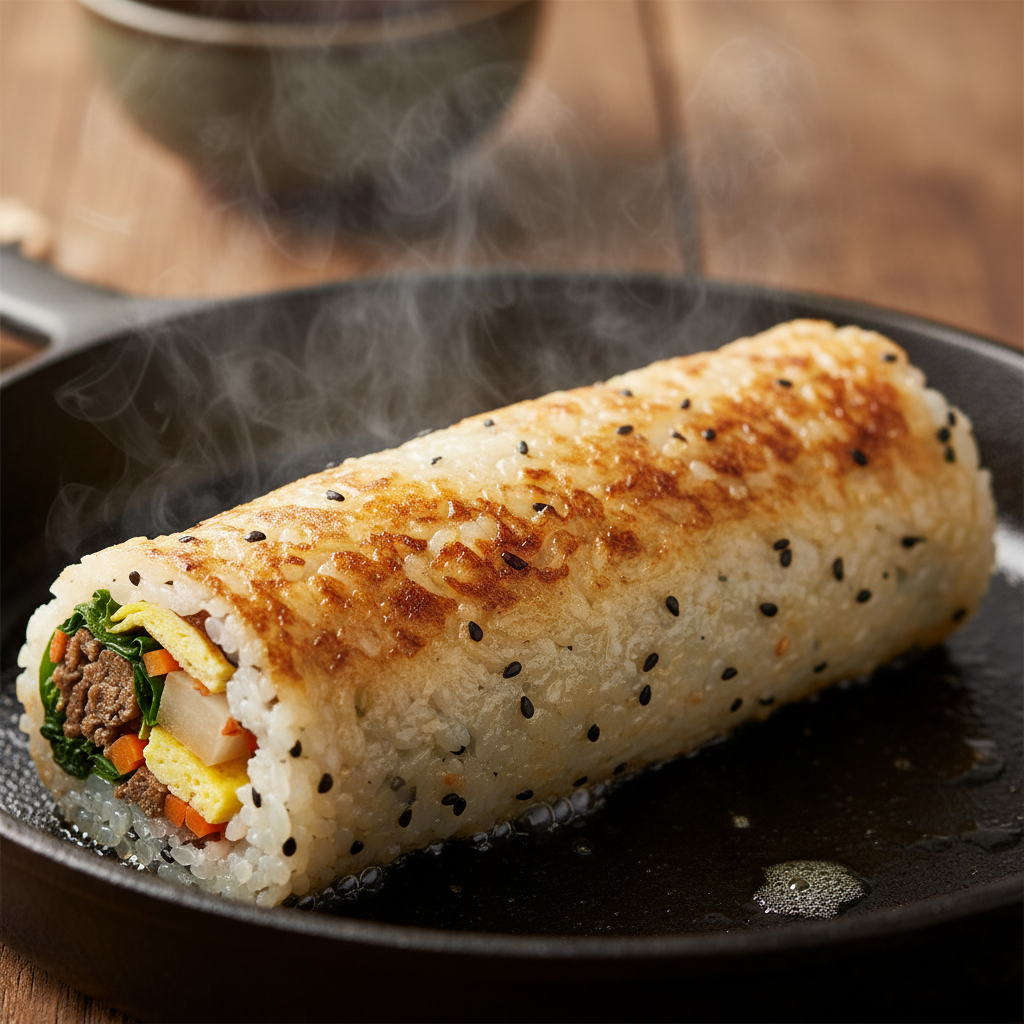
The secret to making delicious gimbap lies in the temperature and seasoning of the rice. Seasoning the rice with sesame oil and salt while it's warm ensures better absorption. Also, slicing ingredients thin and long ensures a beautiful and easy-to-eat cross-section. Letting the rolls rest for a moment gives them a more even shape.
Variation Recipes
Modern-style gimbap embraces a variety of ingredients for unique tastes. Adding avocado or cream cheese offers a creamy, nutty flavor. For those who enjoy spicy food, gimbap with kimchi and gochujang is popular. Tofu gimbap is a healthy choice for vegetarians.
Pairings and Table Setting
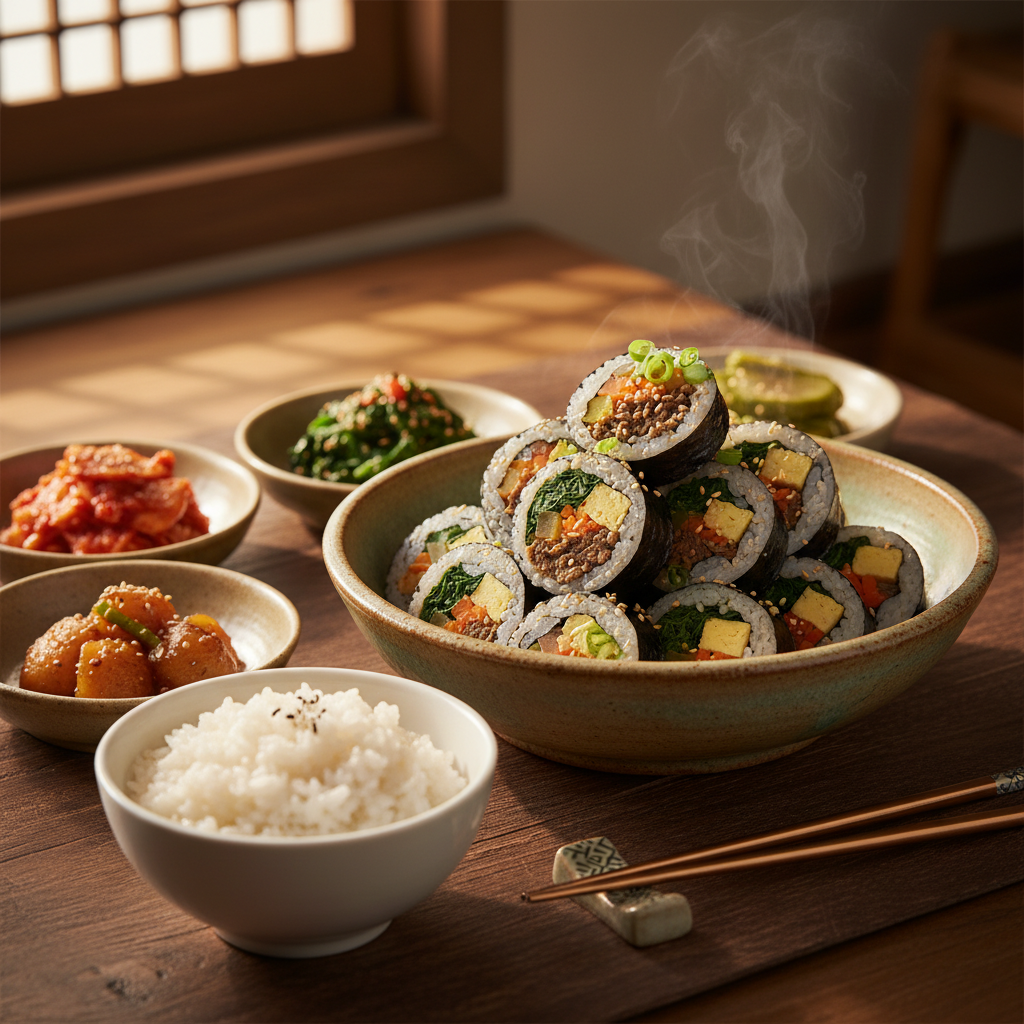
Side dishes that go well with gimbap include cucumber salad and braised potatoes. Pairing it with refreshing seaweed soup makes a perfect meal. Additionally, gimbap pairs well with makgeolli or beer for a light, leisurely experience. Gimbap thus provides taste and elegance in various settings.