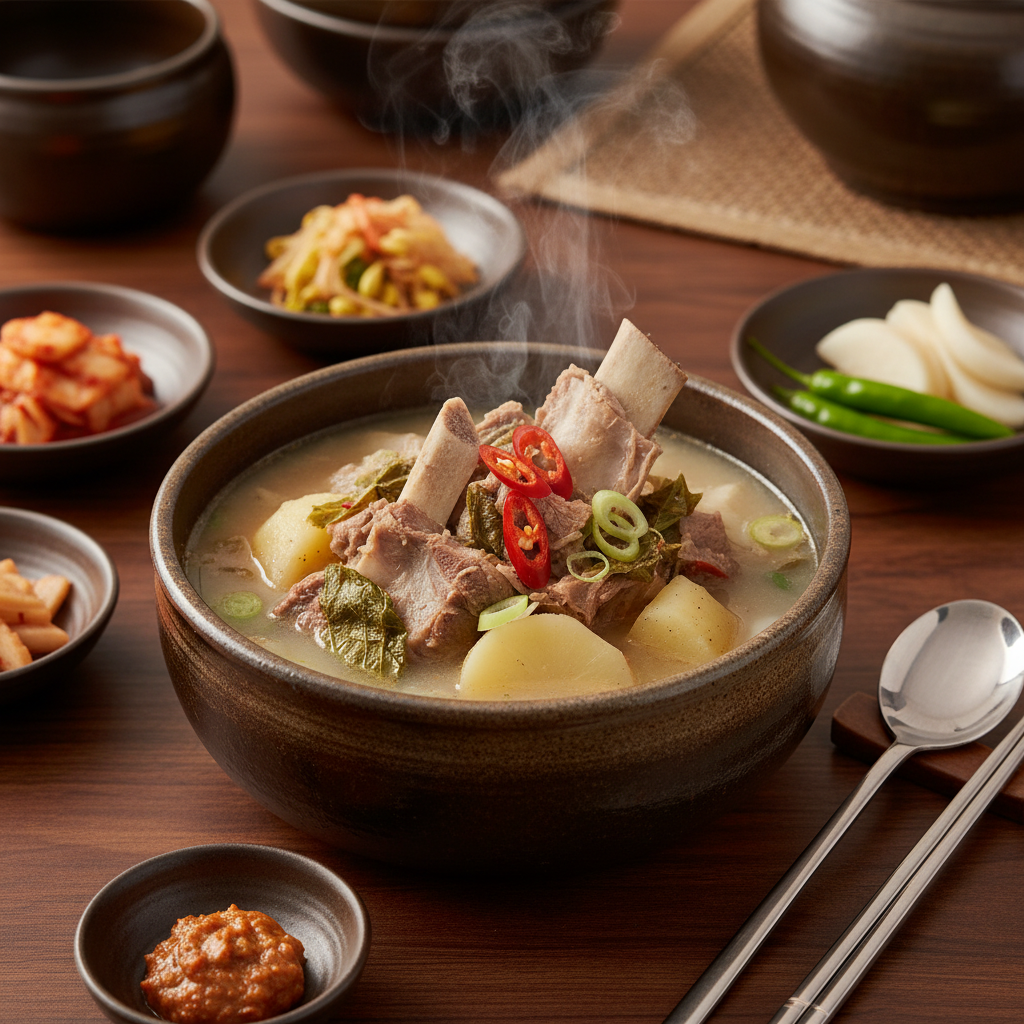
The History and Origin of Gamjatang
Gamjatang, a traditional Korean dish, primarily uses pork spine as the main ingredient to create a flavorful soup. The term 'gamja' does not refer to potatoes but to 'sweet potato stems,' and it's also believed that 'gamja' historically referred to 'bone.' Originating in the Joseon Dynasty, gamjatang was a meal for farmers to supplement their diet with nutrients, featuring the robust flavors from the bones and spicy seasoning.
Authentic Recipe
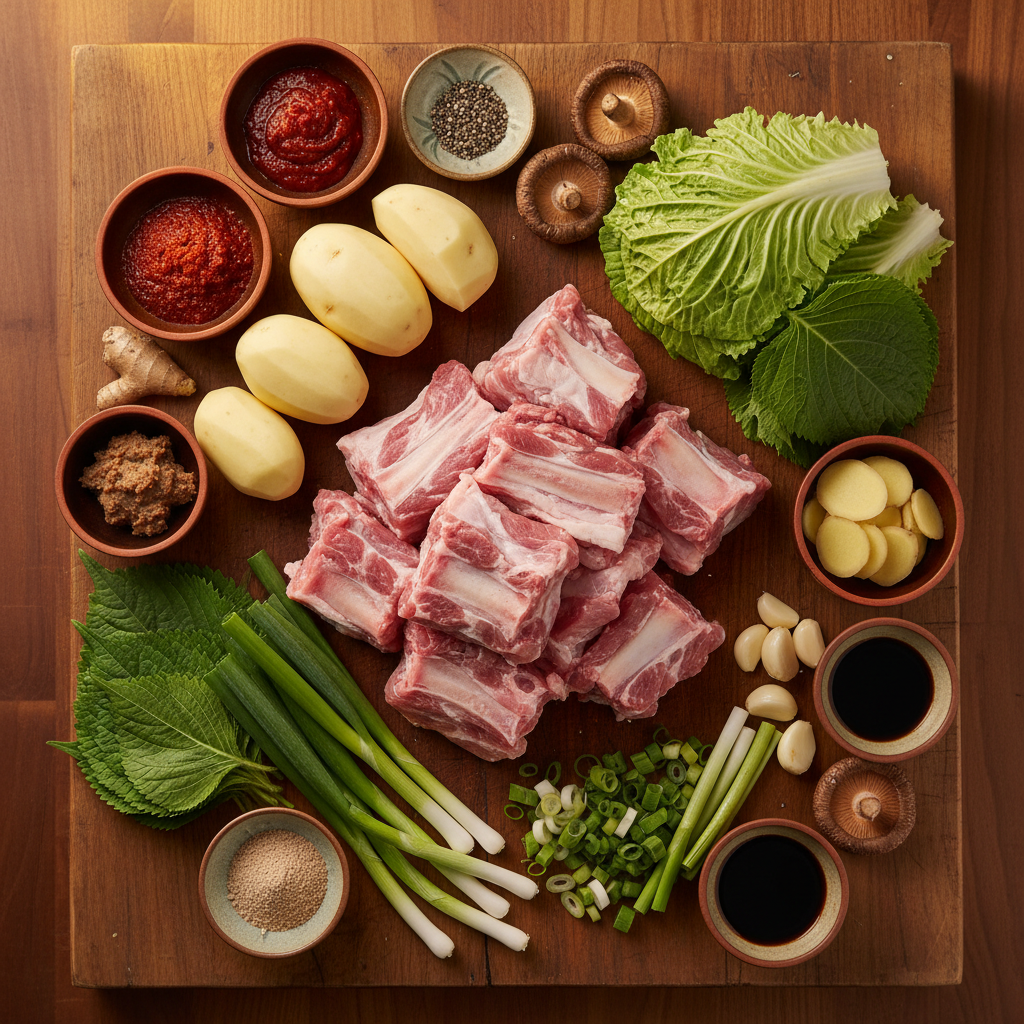
Ingredients
- 1.5kg pork spine
- 3 potatoes
- 200g sweet potato stems
- 2 stalks of green onion
- 3 Cheongyang chili peppers
- 2 tablespoons soybean paste
- 4 tablespoons chili powder
- 6 cloves of garlic
- 1 piece of ginger
- 1 tablespoon sesame oil
- Salt and pepper to taste
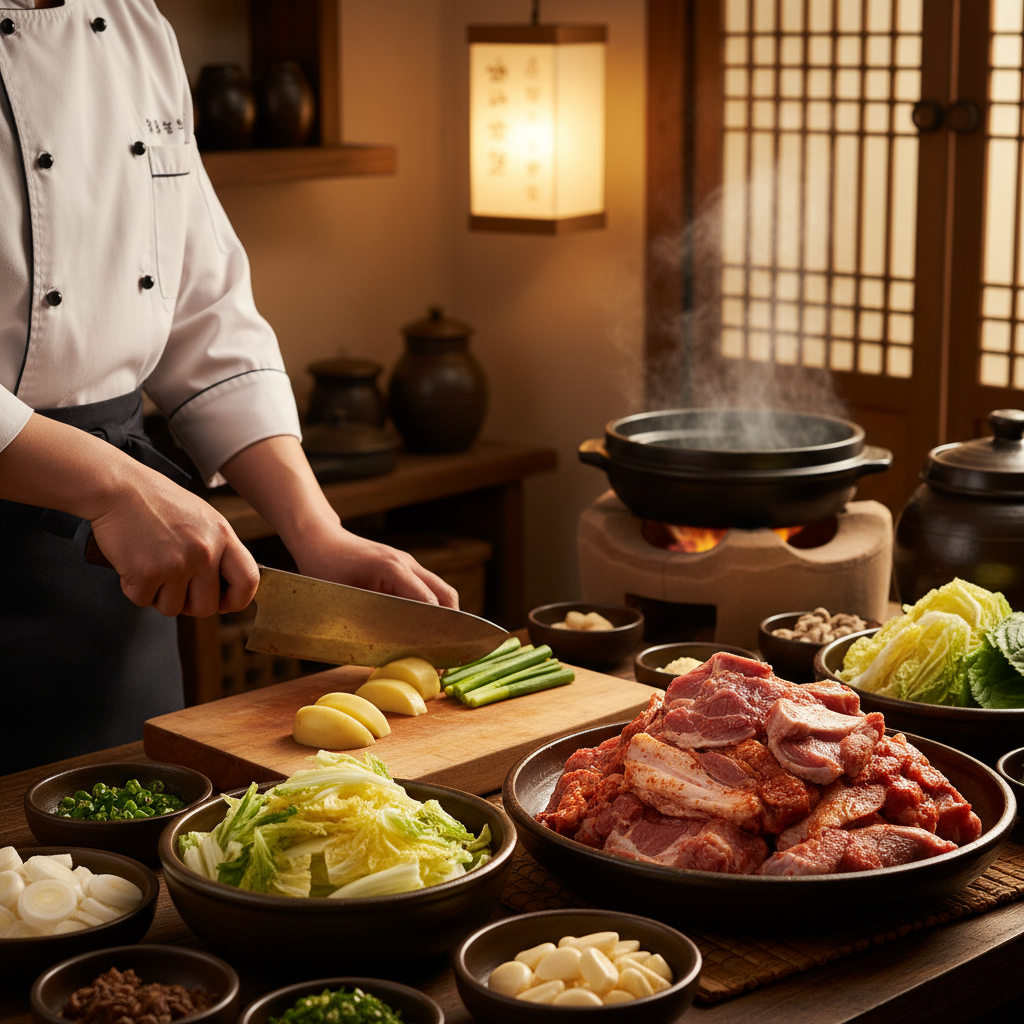
Cooking Steps
1. Soak the pork spine in cold water for about 1 hour to remove the blood.
2. In a large pot, add the pork spine and fill with water, bringing it to a boil. Once boiling, discard the water and refill with clean water.
3. Add soybean paste and ginger, and simmer over medium heat for about 1.5 hours.
4. Add potatoes, sweet potato stems, green onion, and chili peppers, and cook for another 30 minutes.
5. Finally, add chili powder and minced garlic, simmer for 10 more minutes, and season with salt and pepper.
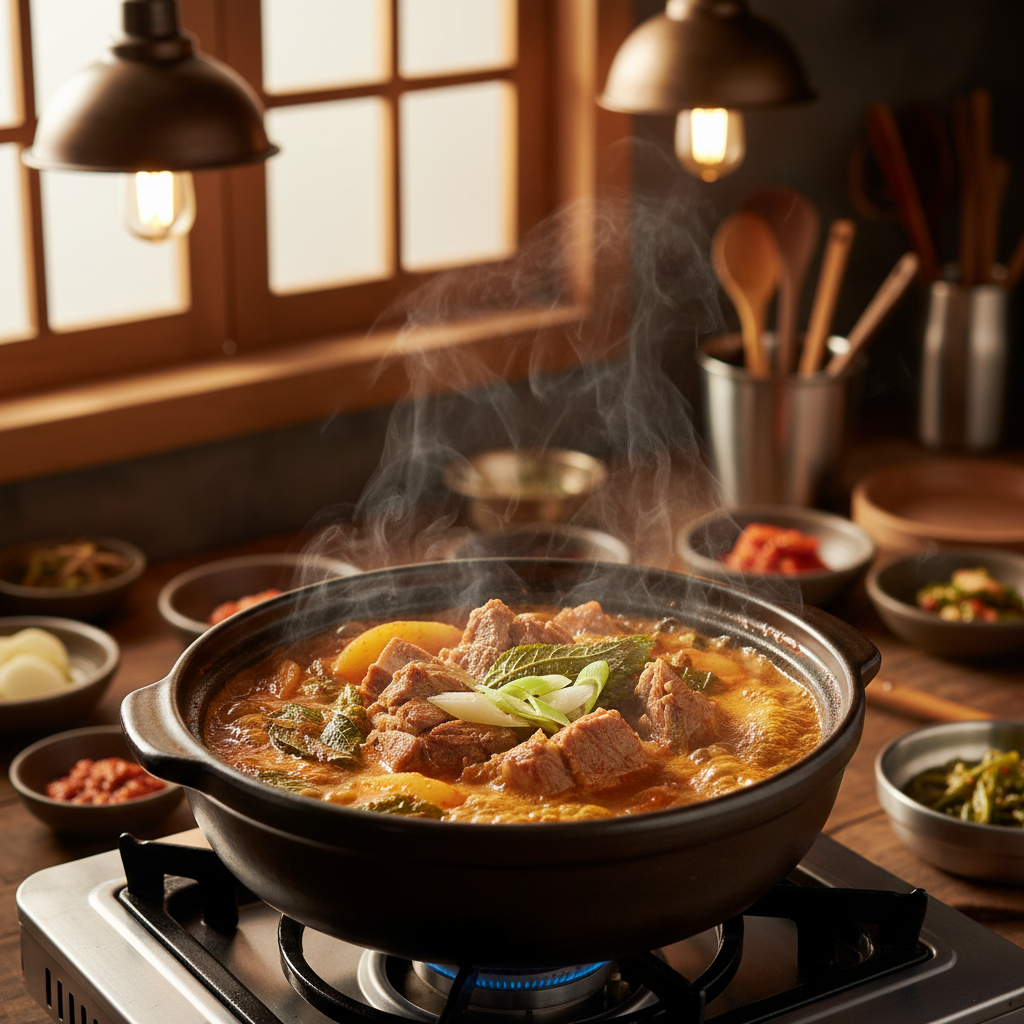
Flavor Characteristics
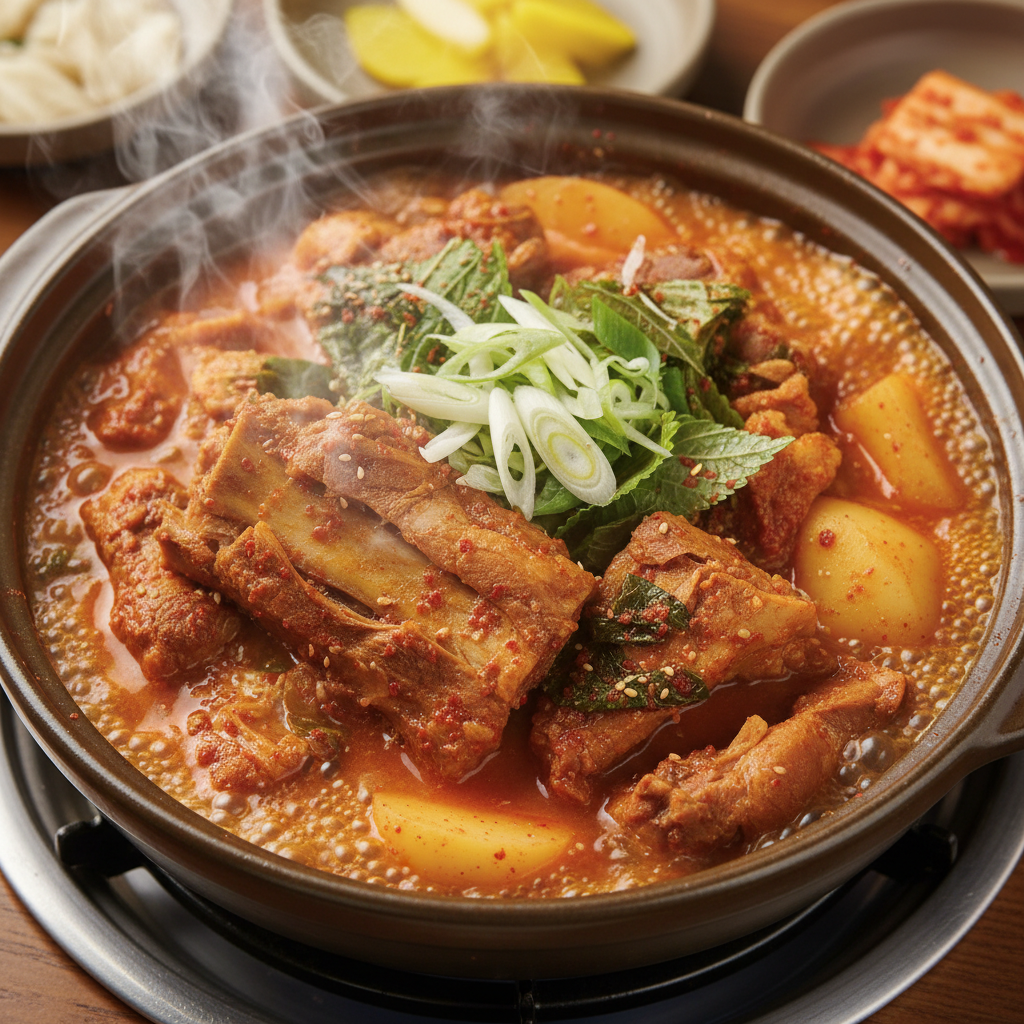
The rich broth from the bone, combined with the spicy base of soybean paste and chili powder, defines the essence of gamjatang. The softness of the potatoes and the chewy texture of sweet potato stems enhance the overall experience. Cheongyang peppers add a mild heat, while the fragrance of green onions elevates the depth of the broth.
Cooking Tips and Secrets
For an even richer gamjatang, simmer the bones long enough to extract deep flavors. After cooking, separating the meat from the bones makes it easier to enjoy. Adjust the spicy levels by varying the amount of chili peppers or powder. A drop of sesame oil adds a wonderful depth to the broth.
Variations of the Recipe
Modern variations include substituting potatoes with carrots or lotus roots for a different texture. A fusion version with cheese on top, baked until golden, is also popular. These adaptations maintain traditional flavors while catering to contemporary tastes.
Accompaniments and Table Setting
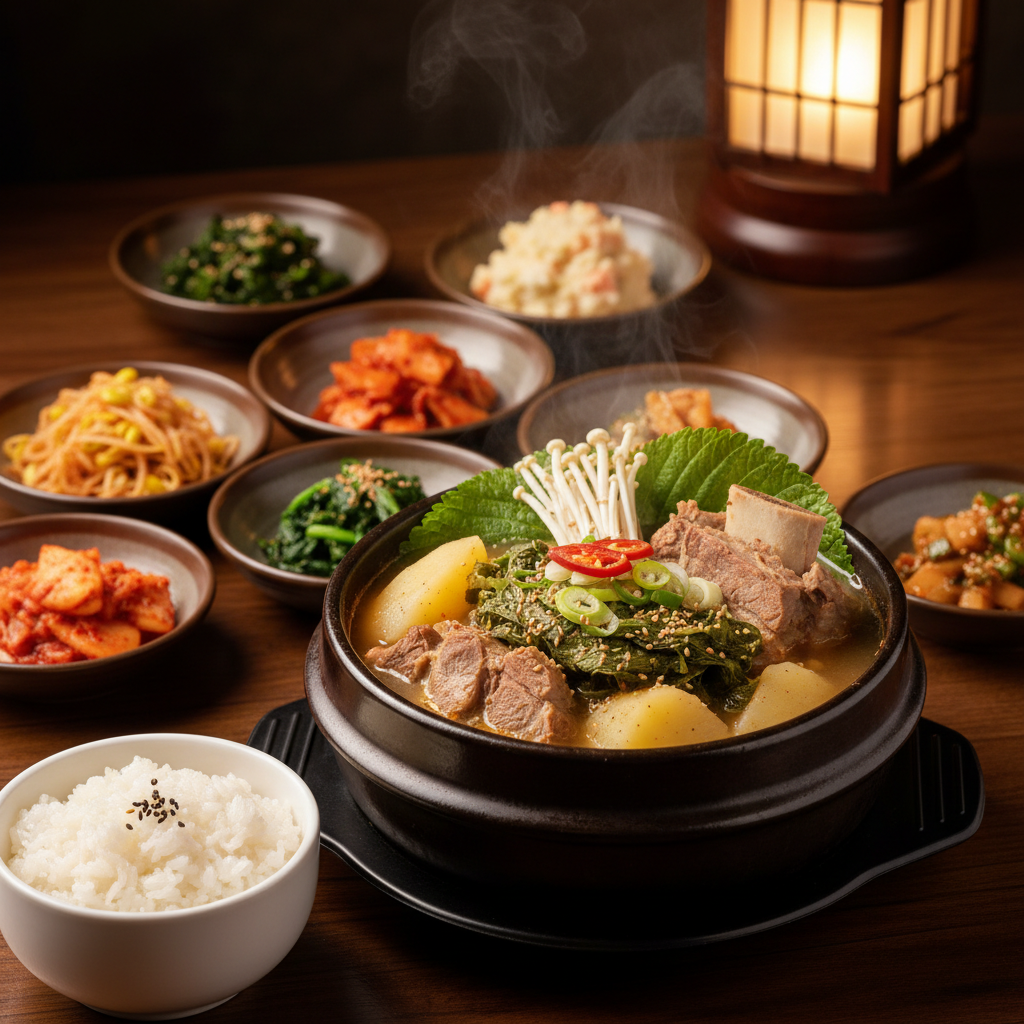
Side dishes such as kkakdugi (cubed radish kimchi), kimchi, and cucumber salad complement gamjatang well. Serving it with rice makes for a hearty meal. Pairing gamjatang with makgeolli (Korean rice wine) or soju enhances its flavors, providing a full dining experience.