
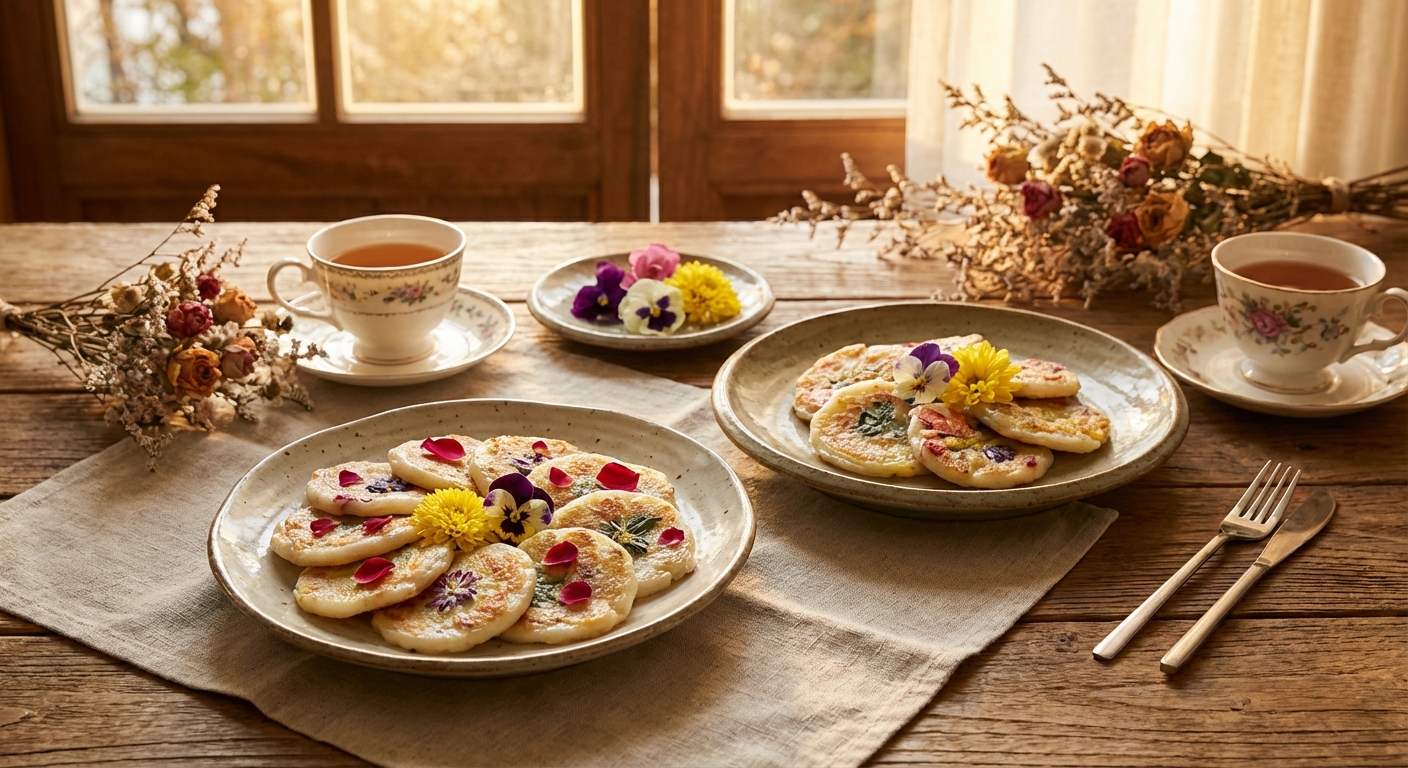
Tradition
Hwajeon is a traditional Korean snack that symbolizes the beauty of spring, with its delightful combination of rice cakes adorned with flower petals. This snack embodies the spirit of living harmoniously with nature, a value deeply ingrained in Korean culture. Hwajeon is particularly enjoyed in spring when flowers bloom in abundance, celebrating the season's beauty and abundance. It is historically linked to the agrarian tradition of "flower hanging" ceremonies, which pray for a bountiful harvest, with Hwajeon symbolizing nature's blessings.
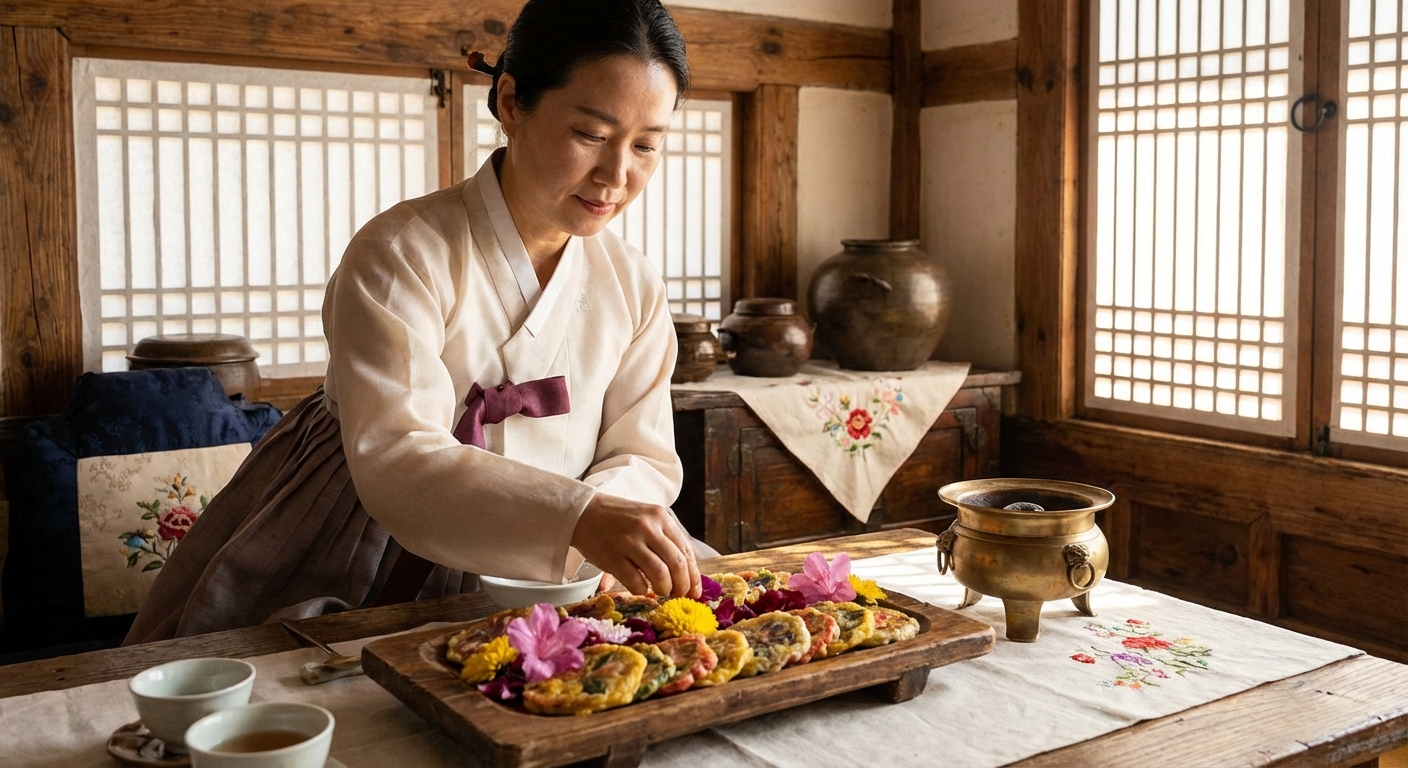
History
The exact origins of Hwajeon are not clearly documented, but its traces can be found in historical texts from the Joseon Dynasty. Notably, it is mentioned in "Gyuhap Chongseo," where it is described as a spring delicacy. Initially, it was enjoyed in royal courts and gradually spread to the common populace, evolving with various flowers and ingredients over time. Hwajeon became a luxurious snack enjoyed by the nobility during spring festivals and later diversified to reflect regional characteristics.
Preparation Method
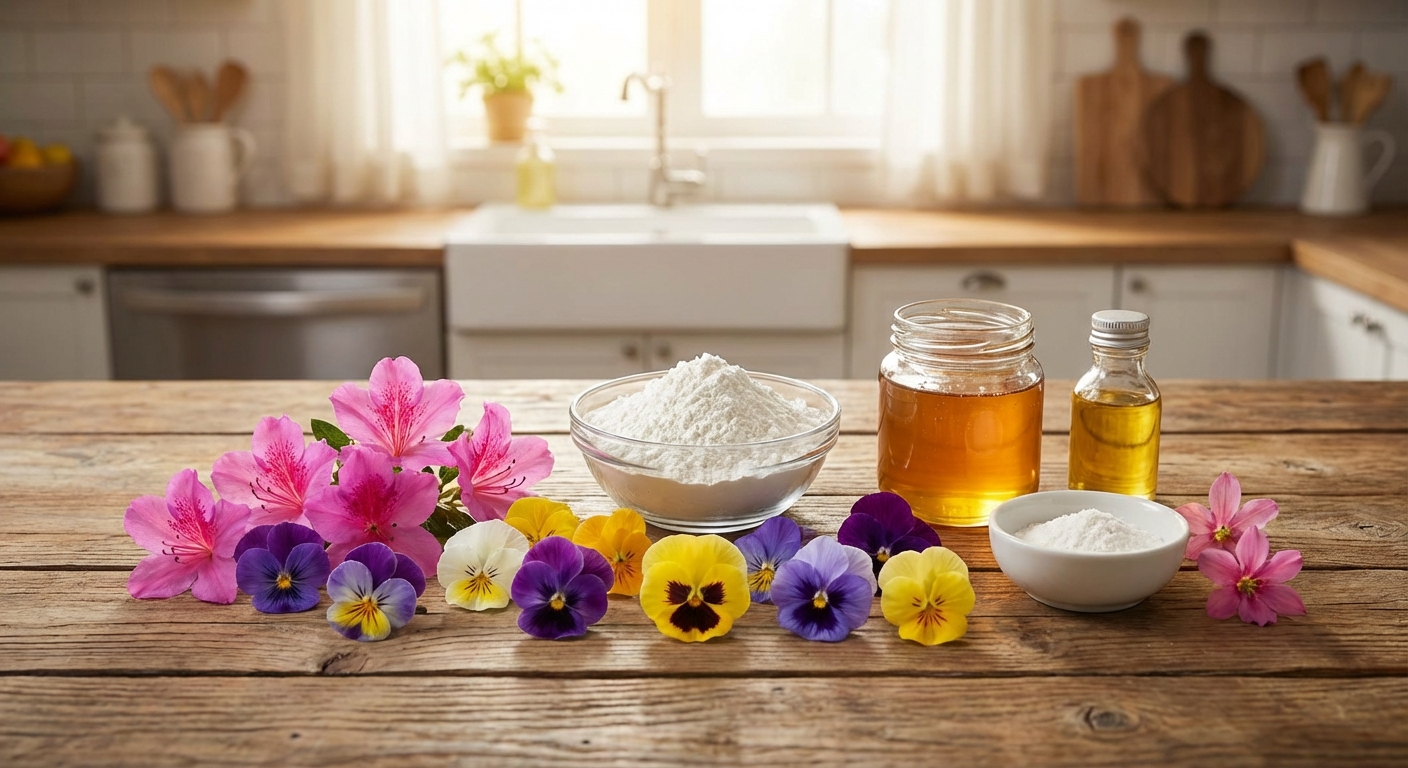
Traditionally, Hwajeon is made using glutinous rice flour and azalea flowers. The process begins by mixing warm water into the rice flour to form a dough with an elastic texture. The dough is then shaped into small ovals, on which flower petals are delicately placed. While azalea is commonly used, various flowers can be chosen according to the season. The cakes are then lightly pan-fried in a minimal amount of oil until golden. It is crucial to balance the oil to avoid greasiness.
Food Stories and How to Enjoy
Hwajeon pairs beautifully with warm tea, such as green tea or chrysanthemum tea, enhancing the floral aroma and offering a taste of spring with every bite. While Hwajeon is delightful on its own, a drizzle of honey can enrich its flavor profile. It is an ideal snack for spring outings or picnics, where its taste and aesthetics can be fully appreciated in nature. Additionally, Hwajeon is often seen at traditional weddings and festive occasions, adding to the event's charm.
Taste
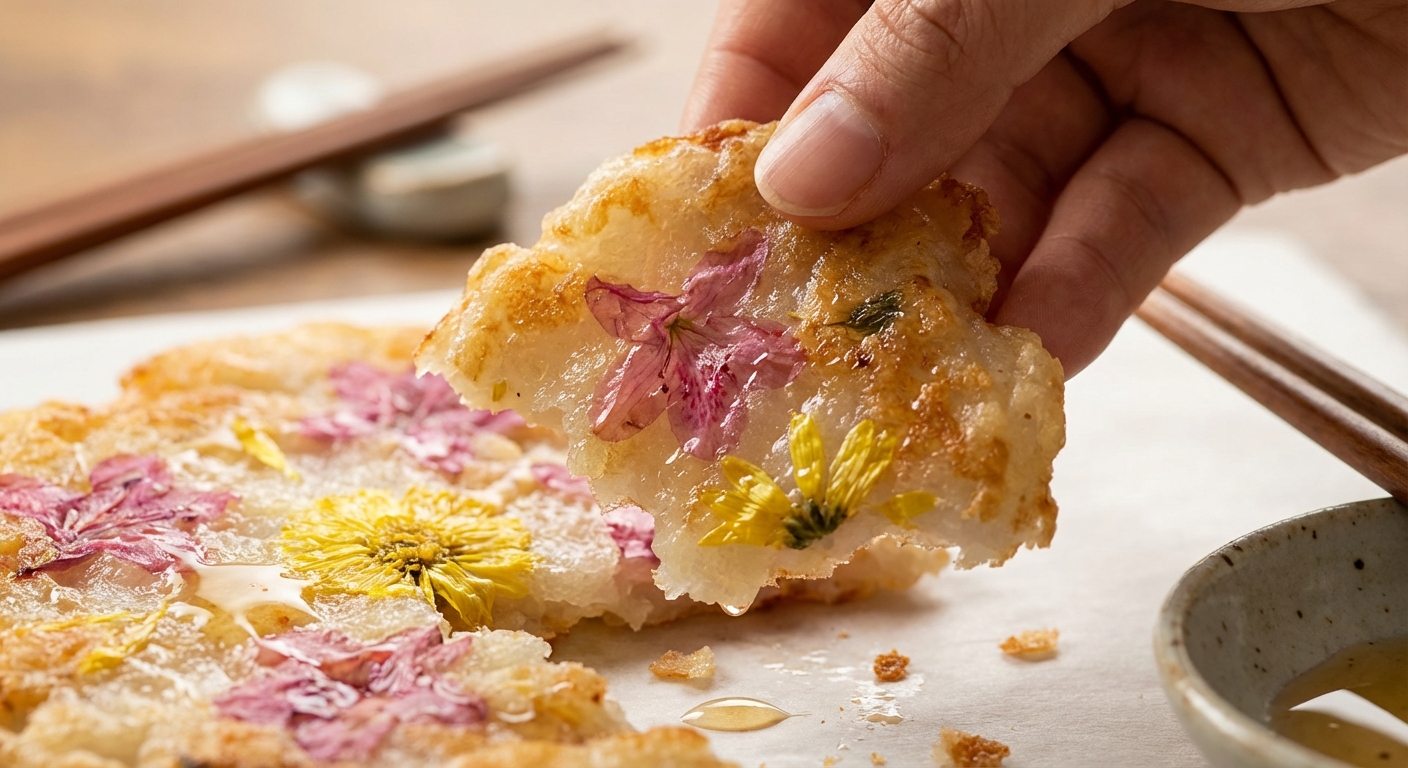
Hwajeon captures the essence of spring, with its chewy texture offering a pleasant elasticity with every bite. The gentle aroma of flower petals spreads throughout the mouth, blending with the nutty flavor of the rice, creating a complex yet harmonious taste. Lightly pan-fried surfaces add a hint of crispiness, and the optional addition of honey can introduce a richer sweetness, elevating the overall flavor experience.
Recommended Eateries
1. Ggotdamhwa - Located in Jongno, Seoul, this place is famed for its traditional Hwajeon and a variety of floral teas, making it a favorite on Instagram.
2. Tteok Cafe Ggotgureum - Situated in Namyangju, Gyeonggi-do, here you can enjoy handmade Hwajeon amidst nature, perfect for family visits.
3. Beauty of Tradition - Located in Haeundae, Busan, this shop offers Hwajeon using local specialties, popular among tourists.
Online Purchase Recommendations
1. Hwajeon Set - Offered by Jeontongbanga, featuring various floral Hwajeon that you can easily enjoy at home.
2. Handmade Hwajeon - Crafted with care, this homemade Hwajeon uses fresh ingredients and traditional methods, boasting a deep flavor.
3. Petal Hwajeon - Made with a variety of flower petals, this Hwajeon is both visually and tastefully pleasing, ideal as a special gift.