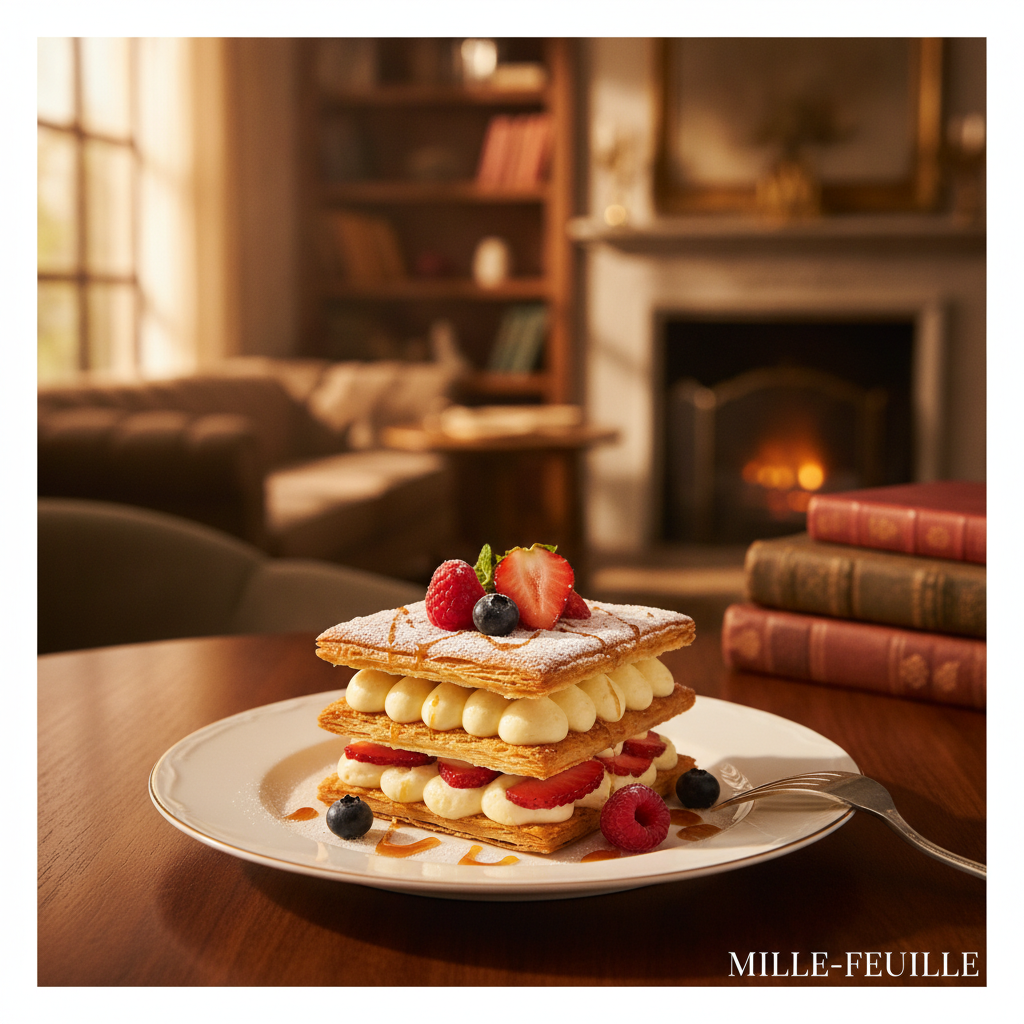
Tradition
Mille-feuille, meaning 'a thousand leaves' in French, is a quintessential French dessert renowned for its delicate layers of pastry, exuding elegance and sophistication. It transcends being merely a sweet treat, embodying the essence of French gastronomic culture, and is an indispensable presence at special occasions or refined tea times. To savor a piece of mille-feuille is to experience the rich history and artistic sensibility of France simultaneously. Each crisp layer encapsulates the long-standing craftsmanship and profound affection the French have for gourmet cuisine.
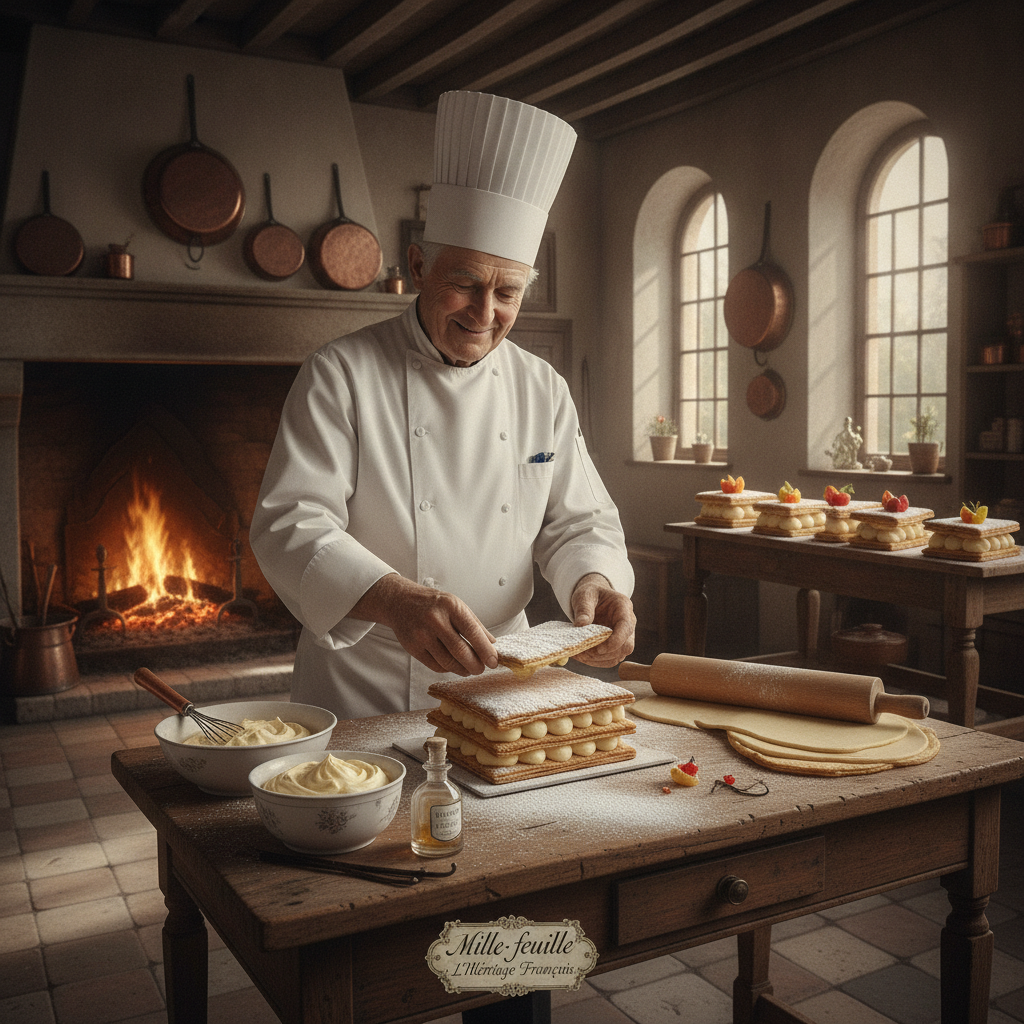
Mille-feuille is an art piece in itself. The architectural beauty formed by the golden-baked pastry layers, combined with the harmonious softness of the cream filling, creates a perfect symphony that delights both sight and taste. For the French, mille-feuille is not just a dessert, but a ritual to savor and celebrate the beauty of life. At special moments like weddings or anniversaries, mille-feuille always graces the table, delivering sweet messages of love and celebration. Sometimes, a simple piece of mille-feuille enjoyed with a warm cup of tea on a quiet weekend afternoon can bring extraordinary joy to daily life. In any moment, mille-feuille offers sweet solace and happiness to people, spreading the deep charm of French culture.
This dessert began to gain renown adorning the banquet tables of French aristocracy, and over time, evolved into a beloved dessert among the general public. The very process of making mille-feuille demands high levels of skill and dedication, thus, the act of tasting it implies a sense of respect and gratitude. In French households, serving mille-feuille to guests can signify the highest form of hospitality. In this way, mille-feuille is recognized for its value as a symbolic presence deeply rooted in the lives and culture of the French, beyond just a food item. Its delicate taste and beautiful appearance represent the elegance of French gastronomy, captivating palates worldwide.
History
The exact origin of mille-feuille is somewhat unclear, but it is believed to have first appeared in France in the 17th century. Some historians suggest that the famous chef La Varenne alluded to an early form of mille-feuille in his 1651 cookbook, "Le Cuisinier François," where he mentioned the recipe for puff pastry. However, it is presumed that the mille-feuille of that era was simply several layers of baked pastry, not the cream-filled version we know today.
The evolution of mille-feuille into its modern form is largely attributed to the 19th-century French chef Antoine Carême. Known as "the king of chefs and the chef of kings," Carême was a pivotal figure in the golden age of French cuisine. He refined puff pastry techniques and devised the method of filling the layers with cream, thus completing mille-feuille as we know it today. Carême not only aimed to create delicious dishes but also emphasized the aesthetic value of food. The mille-feuille born from his hands became a masterpiece that offered both visual beauty and gustatory pleasure. Under his influence, mille-feuille gained immense popularity among the French upper class and aristocracy, establishing itself as a symbol of luxury desserts. It subsequently spread throughout France, gaining widespread public affection, and patisseries in various regions continued its legacy by offering their own unique mille-feuille recipes.
Early mille-feuille was typically served with nuts or fruit jams, but it gradually evolved to incorporate custard cream or whipped cream fillings. The smooth custard cream infused with vanilla bean, in particular, enriched the flavor of mille-feuille, and it became common to dust it with powdered sugar or fondant icing, then decorate it with chocolate or fruits. By the mid-19th century, several famous patisseries featured mille-feuille as their signature item, firmly establishing it as an iconic French dessert. Today, mille-feuille is a globally beloved dessert, with chefs worldwide continuing its legacy by presenting various forms of mille-feuille, adding contemporary interpretations to traditional methods. Thus, the history of mille-feuille goes beyond a simple dessert's evolution, paralleling the development of French culinary culture and continuing to this day.
Preparation
The preparation of mille-feuille, while seemingly simple, is in reality a continuous process demanding high skill and patience. The core lies in making 'Puff Pastry'. Puff pastry is primarily made from flour, butter, salt, and water, where butter is folded into the dough and repeatedly rolled out and folded, creating dozens, even hundreds, of thin layers. During this process, it is crucial to maintain appropriate temperatures for the dough and butter to prevent the butter from melting. Sufficient resting time in the refrigerator is also essential to achieve a flaky and crisp pastry.
Traditional mille-feuille pastry requires at least six folds. Through this process, the dough accumulates alternating layers of thin dough and butter. When baked in the oven, the moisture in the butter layers evaporates, causing each layer to puff up and separate, creating a crispy texture. These meticulously baked golden-brown pastry layers form the most crucial foundation of mille-feuille. Next, the cream to be filled between these crispy pastry layers is prepared. The most traditional cream is 'Crème Pâtissière', or custard cream. Made with milk, sugar, egg yolks, flour or cornstarch, and vanilla beans, its smooth and rich flavor creates a perfect harmony with the crispness of the mille-feuille. Like the pastry, the cream must be sufficiently chilled to achieve a smooth and uniform texture. Skilled confectioners adjust the cream's consistency and the depth of vanilla flavor to perfect their own unique mille-feuille.
Three layers of pastry are sandwiched with two layers of crème pâtissière. The top layer is dusted with powdered sugar or coated with fondant icing, then delicately patterned with chocolate or garnished with fresh fruits. All these steps require the touch of a practiced hand and delicate techniques honed by
Looking for a place nearby? Search “밀푀유” on Naver Map.