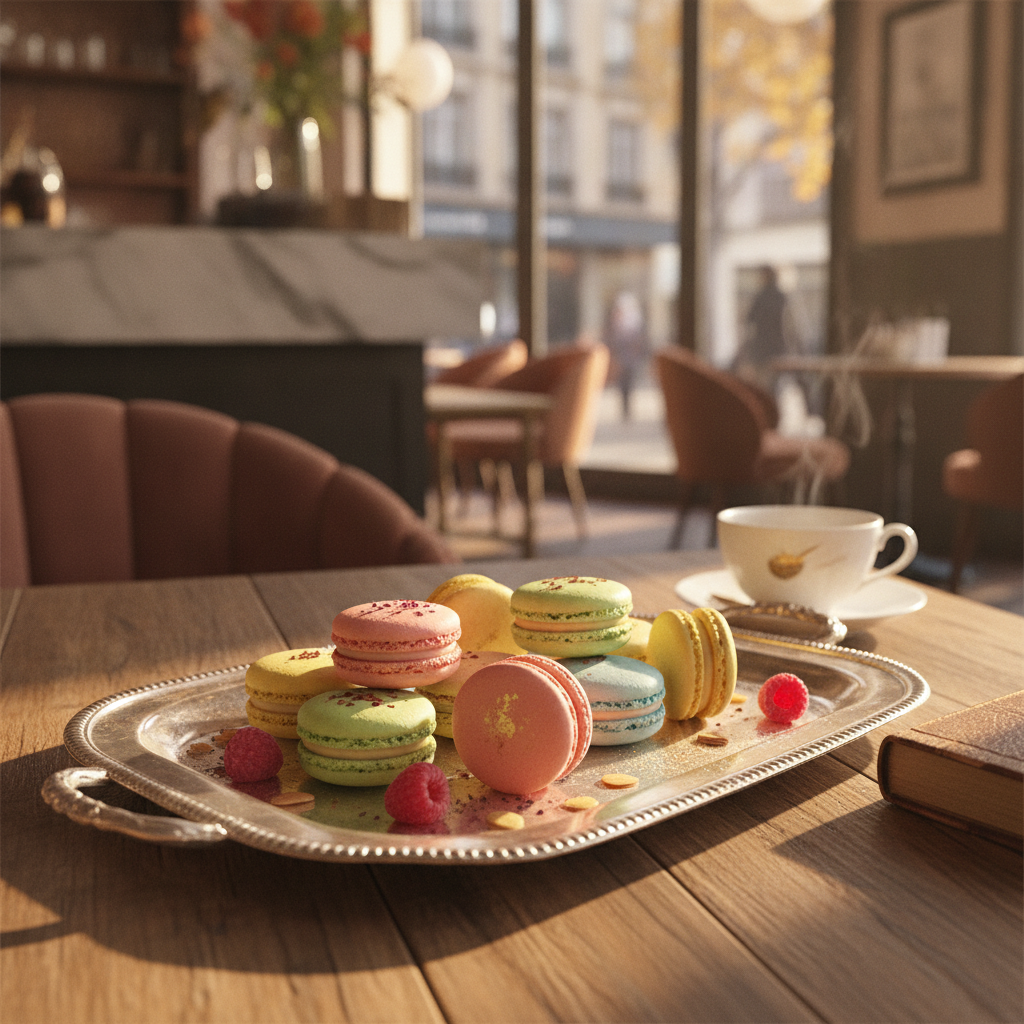
Tradition
Macarons are more than just a sweet treat; they are an iconic dessert embodying France's delicate culinary culture and romantic sensibility. The moment we taste a macaron on the streets of Paris, or by the window of an old-fashioned cafe, we often feel as if we've become Parisians ourselves. It's not just a sweet taste; the experience a macaron offers is like a painting, a poem. When conveying feelings to a loved one, celebrating a special occasion, or simply wanting to give ourselves a small gift, a macaron delivers a message sweeter and more heartfelt than any words. Its delicate colors and harmonious flavor combinations seem to capture the essence of French art, providing both visual delight and gastronomic satisfaction, much like a well-crafted haute couture dress. For a long time, macarons have represented Parisian dessert culture, cherished across various settings from aristocratic banquets to humble family tables. They serve as a medium that speaks of French life, art, and love. Each bite, with its crispness and chewiness, followed by a sweet aroma filling the mouth, offers a small moment of happiness and comfort to our weary souls, transporting us to a dreamlike state, if only for a moment. Macarons have thus established themselves as a magical presence that stimulates our senses and makes life richer and more beautiful.
In France, particularly, macarons are an indispensable part of important festivals, anniversaries, and social gatherings. It is common to exchange boxes of macarons as gifts during special holidays like New Year's, Easter, and Christmas, a beautiful tradition that goes beyond simply sharing food, extending to wishing each other happiness and good fortune. At auspicious events such as wedding receptions or engagement parties, macarons elegantly enhance the celebratory atmosphere. A "Pièce Montée" (stacked dessert) made of various colors and flavors of macarons looks like a work of art itself, leaving a lasting impression on guests. Even during simple tea times with friends, macarons possess a magical power to enrich conversations. The sight of people choosing their favorite macaron flavors, discussing their preferences, and sharing laughter illustrates how deeply macarons are embedded in French life. Furthermore, macarons exhibit regional variations, a result of local culture and ingredients being reflected in the dessert. For example, Nancy macarons have a crisp texture both inside and out, while Amiens macarons boast a richer flavor with honey and fruit. In this way, macarons preserve unique traditions and histories in each region, solidifying their status as a beloved dessert throughout France.
History
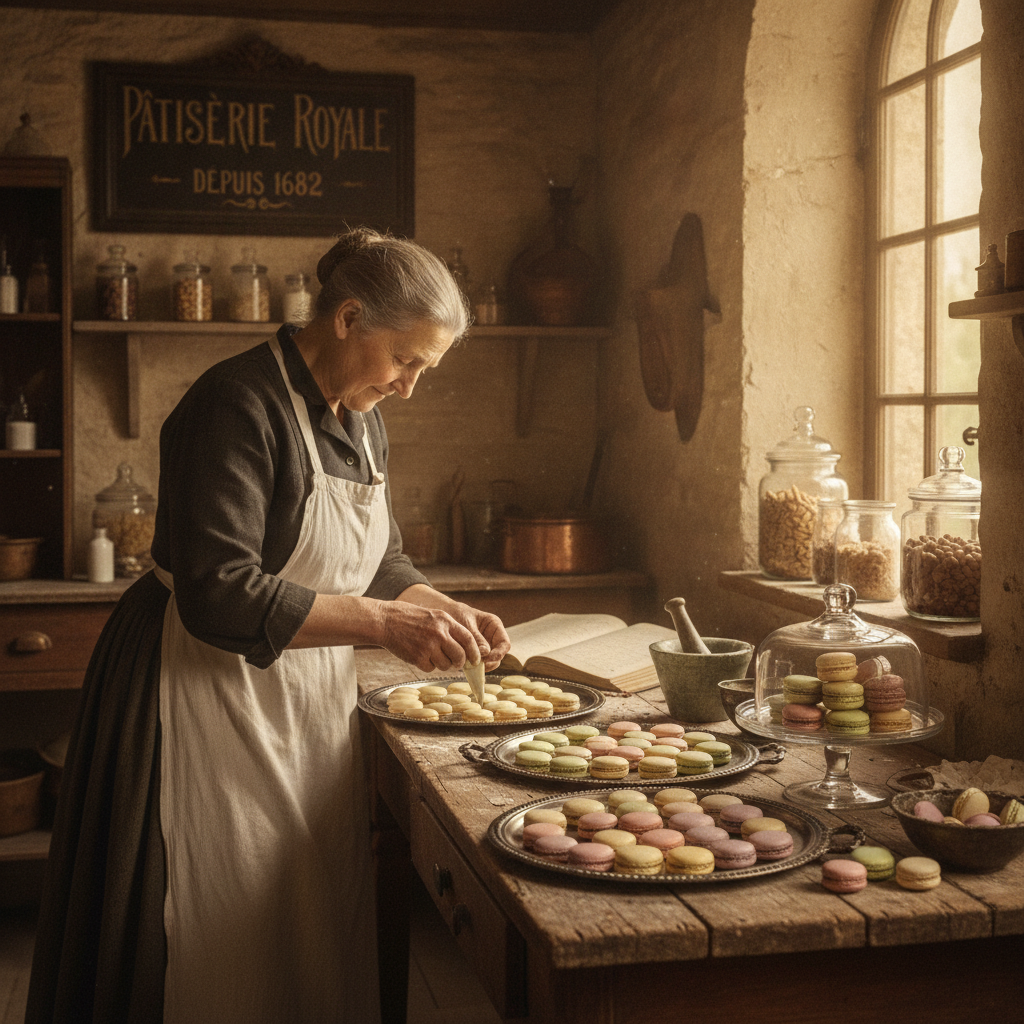
The history of macarons is much deeper and more fascinating than one might imagine. This charming dessert's origins trace back to 16th-century Italy. At that time, Italy was a center of European culture, and particularly advanced in confectionery. The name 'macaron' is derived from the Italian word 'maccherone,' meaning 'to crush' or 'to knead.' Originally a simple cookie made of almonds, sugar, and egg whites, macarons were introduced to France in 1533 by Catherine de' Medici, who came from Florence, Italy, to marry Henry II of France. Queen Catherine brought chefs and confectioners from her homeland, disseminating Italy's sophisticated dessert culture to the French court, and macarons were among the delicacies introduced. Initially, they were simple, single-shell cookies enjoyed by regional monasteries and aristocrats. Records show that nuns at the Carmelite convent in Nancy made and ate macarons to supplement their nutrition during fasting, a tradition that continues to this day under the name 'Macarons de Nancy.'
Macarons evolved into the sandwich-like form we know today, with a cream filling between two shells, in early 20th-century Paris. At the heart of this transformation was Ladurée, a renowned Parisian patisserie. In the early 1900s, Pierre Desfontaines, a pastry chef at Ladurée, created the sandwich macaron by filling two macaron shells with ganache, buttercream, or jam, which became the prototype of the modern macaron. This innovative idea infused macarons with richer flavors and more vibrant colors, leading to explosive popularity. Ladurée subsequently introduced a wide array of macaron flavors and colors, establishing itself as Paris's premier dessert house, and macarons became an iconic Parisian dessert beloved worldwide. From the mid-20th century onwards, talented pastry chefs like Pierre Hermé in Paris elevated macarons to an artistic level. They broke conventional molds, using daring ingredient combinations and innovative plating to transform macarons from mere cookies into a gourmet experience. Today, macarons are being adapted and developed in various forms around the world, incorporating unique ingredients and cultures from different countries to create new flavors and styles.